

Losing a U-2 over the Soviet Union was a nightmare scenario, and Francis Gary Powers was not dreaming.
It was about 6:20 a.m. on Sunday, May 1, 1960, when a crew member pulled away the ladder and slammed the canopy shut. The pilot then locked it from the inside. As Francis Gary Powers taxied onto the runway at Peshawar airbase in Pakistan and eased the U-2C, model 360, into the air, the J75/P13 engine gave off its distinctive whine. He never lost the thrill of hearing that familiar sound.
As he climbed quickly toward his assigned altitude and switched to autopilot for his twenty-eighth reconnaissance mission, he headed toward Afghanistan and sent a single click over the radio. A second click came back moments later in confirmation. As Francis Gary Powers Jr. and Keith Dunnavant explain in Spy Pilot, this was his signal to continue as planned, in radio silence.
Determined to gather as much intelligence as possible in a single mission, Powers was set to fly over the Hindu Kush in the Himalayas and into the southern USSR, covering a 2,900-mile stretch of Soviet territory. His route would take him from Dushambe and the Aral Sea to Tyuratam, then on to Sverdlovsk and northwest to the Plesetsk facility, where he was to assess Soviet ICBM progress before continuing toward Murmansk on the Barents Sea. He was then to exit northward and land in Bodø, Norway, where a recovery team would be waiting to retrieve both the U-2 and the pilot. If he encountered an emergency, such as a fuel shortage, he was authorized to cut across neutral Sweden or Finland, though that would almost certainly create problems for Washington. As the saying went at the time, “Anyplace is preferable to going down in the Soviet Union.”
The Soviets were especially dangerous when they knew the U-2 was on its way. According to an official protest later filed with the U.S. government by Afghanistan’s foreign minister over the violation of Afghan airspace on the flight north, the Soviets had already been alerted to the spy plane’s approach.
After entering the thin, frigid air of the stratosphere, Frank was no longer sweating inside his pressure suit, but his pulse quickened. He always felt uneasy when crossing into the USSR. Nine hours was a long time to remain airborne, almost all of it over enemy territory, and he knew he had never been more exposed.
Because his sextant—a device that measures distance by the angular separation between two objects—had been calibrated for a 6 a.m. departure, its readings were off by nearly half an hour, forcing Frank to depend heavily on his compass and clock for navigation. For the first 90 minutes or so, thick cloud cover made staying on course even more difficult.
By the time the sky below became a sheet of blue, he spotted something in the distance: the contrail of a single-engine jet flying the opposite way at supersonic speed. Soon after, he saw another contrail racing toward him at the same speed. He assumed it was the same aircraft, having turned around to shadow him.

“I was sure now they were tracking me on the radar,” he said, relieved by the enormous distance, which reflected the jet’s inability to approach the U-2’s altitude. “If this was the best they could do, I had nothing to worry about.”
The response to the intruder eventually reached the Kremlin. It was still early morning in Moscow when Premier Khrushchev’s phone rang.
Khrushchev told Soviet defense minister Rodion Malinovsky, “You must do your very best! Give it everything you’ve got and bring that plane down!”
After telling his leader that a new SA-2 battery had been deployed along the aircraft’s apparent route, Malinovsky said, “We have every chance of shooting the plane down if our anti-aircraft crews aren’t gawking at the crows!”
After turning on the camera while flying over the Tyuratam Cosmodrome, the launch site for Soviet space launches that had already been confirmed and extensively photographed on earlier U-2 missions, Powers made a slight course correction and continued north, eventually enjoying a clear view of the snow-covered Ural Mountains, the geographical boundary between Europe and Asia, off his left wing.
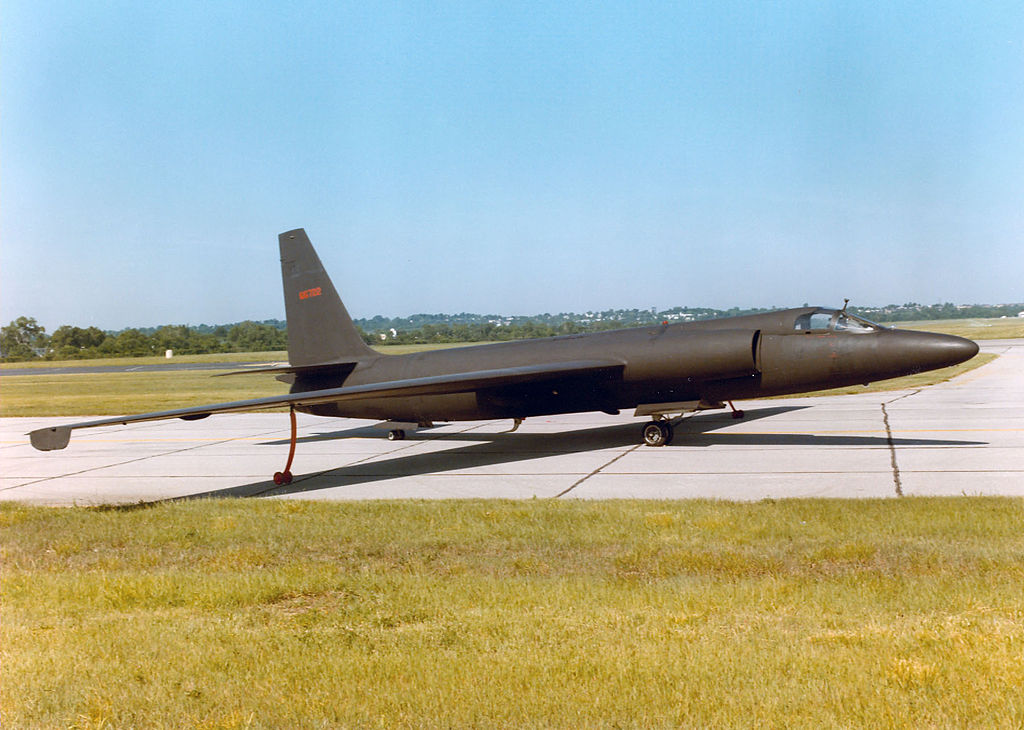
Passing a series of landmarks, he jotted down notes for his debriefing. When the autopilot malfunctioned—serious enough to justify aborting the mission—he shut it off and took over manually. The decision to turn back or continue was his alone, but with more than 1,300 miles of Soviet territory already behind him, he made the grim choice to press on. He had gone too far to return.
Nearly four hours into the flight, just southeast of Sverdlovsk, while writing in his flight log, he felt a sudden jolt. A powerful shockwave rolled through the aircraft as a brilliant orange flash filled his vision.
“My God,” he said to himself. “I’ve had it now.”
Losing a U-2 over the Soviet Union was the stuff of nightmares, and Francis Gary Powers was awake for it.
With his left hand on the throttle and his right on the stick, Powers checked his instruments. Everything appeared normal. Then the wing tilted, and the nose dropped. Realizing he had lost control, he felt a violent shudder rattle him side to side in his seat. He thought the wings had torn away.
As the aircraft spun out of control, Kelly Johnson’s once-formidable machine was no match for gravity. Powers reached for the self-destruct button, which was set on a 70-second delay, and prepared to eject. But he hesitated and pulled his finger back. Pushed hard by the immense g-forces and trapped in a suit that had inflated when the cabin lost pressure, he quickly came to a grim conclusion: if he ejected in that position, the impact of his legs against the canopy rail would sever both of them, because they were pinned beneath the front of the cockpit.
Thinking fast as the aircraft dropped below 35,000 feet, Frank jettisoned the canopy, which flew skyward, and decided to climb out of the cockpit. The moment he unfastened his seat belt, the force of the aircraft threw him clear.
But that solution created a new problem: still attached to his oxygen supply and pinned by severe g-forces, he could no longer reach the self-destruct buttons. Even as frost covered his faceplate in the bitter cold, he fumbled blindly in the glaring daylight, stretching his fingers as far as he could. It was no use. He now had no way to destroy the plane before it could fall into enemy hands.
Somehow he broke free from the oxygen hose and then felt a sudden tug that pulled him forward. His parachute deployed automatically at 15,000 feet, and he drifted slowly toward the countryside near a small village.
“I was immediately struck by the silence,” he later recalled. “Everything was cold, quiet, serene… There was no sensation of falling. It was as if I were hanging in the sky.”
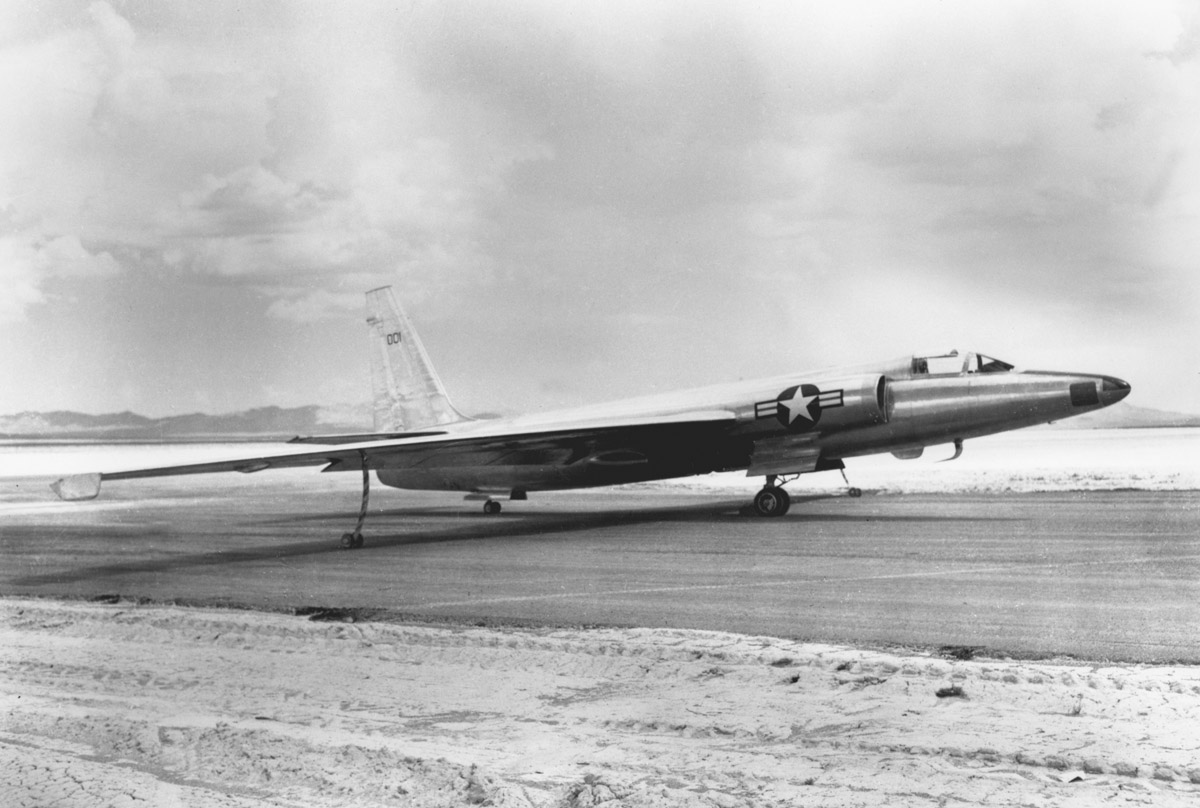
Top Image: From the Powers Family Collection
Photo by U.S. Air Force

