

The guy has on a fedora and a trench coat with a pink carnation in the lapel. Johnson says he goes over and sits down, and the guy just stares at him for about a minute. Then he says, “We will take six for 30 million.”
David Peters was an SR-71 pilot who joined the program in 1976 and flew until he retired in 1986. He was originally from Tacoma, Washington. He first saw the SR-71 in 1967 while flying F-4s. After a fuel problem forced his aircraft to land at Naval Air Station Fallon in Nevada, he saw an SR-71 for the first time. Coincidentally, John Storie and George Bull, both SR-71 pilots, had also landed there in the “B” model because of a fuel problem. Dave told his backseater, “Someday I’m going to fly that plane.”
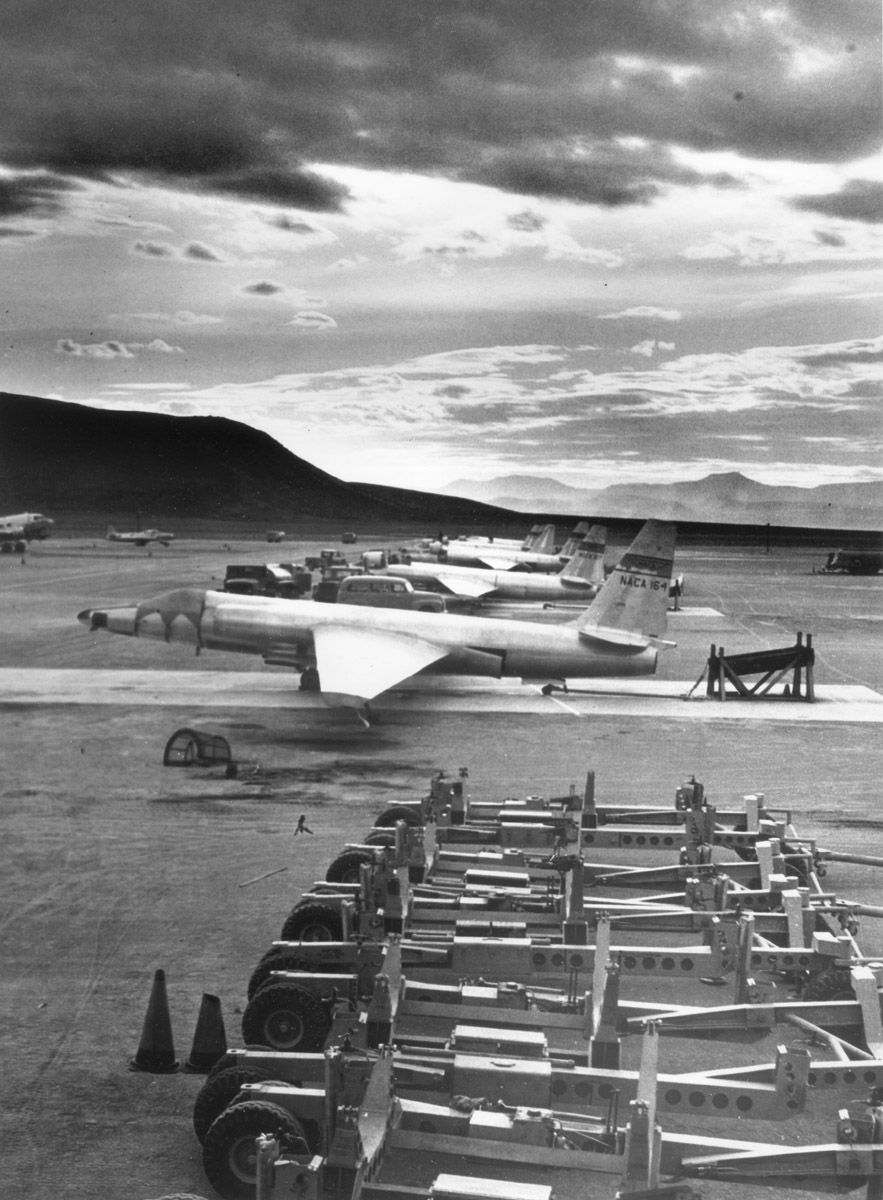
Built in complete secrecy by Kelly Johnson and Lockheed’s Skunk Works, the original U-2A made its first flight in August 1955. Its early missions over the Soviet Union in the late 1950s gave the president and other U.S. decision-makers crucial intelligence on Soviet military strength. In October 1962, the U-2 photographed the buildup of Soviet offensive nuclear missiles in Cuba, helping trigger the Cuban Missile Crisis. More recently, the aircraft has supplied intelligence in Korea, the Balkans, Afghanistan, and Iraq. It also conducts peacetime reconnaissance when needed, supporting disaster relief efforts during floods, earthquakes, and wildfires, as well as search-and-rescue missions.
The U-2R, which first flew in 1967, was 40 percent larger and more capable than the original aircraft. The TR-1A, a tactical reconnaissance variant, first flew in August 1981 and was structurally identical to the U-2R. The final U-2 and TR-1 aircraft were delivered in October 1989, and in 1992 all TR-1s and U-2s were reclassified as U-2Rs. Since 1994, $1.7 billion has been invested in modernizing the U-2’s airframe and sensors. Those upgrades also included the switch to the GE F118-101 engine, which led to the Air Force’s U-2 fleet being redesignated as the U-2S.

An urban legend has long surrounded the contract for the first six U-2 aircraft purchased by the CIA.
According to the story, Kelly Johnson was in his office when the CIA called and asked him to meet a man at a restaurant in downtown Georgetown. He was told the man would be seated in the back and wearing a pink carnation on his lapel. Johnson arrived at the appointed time and, sure enough, found a suspicious-looking man in a booth near the rear of the restaurant.
The man was wearing a fedora and trench coat, with a pink carnation pinned to his lapel.
Johnson sat down, and the man silently stared at him for nearly a minute before saying, “We will take six for 30 million.” They continued to stare at each other until Johnson felt something against his leg and looked down to find a large brown paper bag beneath the table. By the time he looked up again, the man was gone. Inside the bag were bundles of $100,000 bills. Johnson later said his first thought was, “Kelly, you’re a*s is dead.”
The CIA director was the only federal employee authorized to spend government funds without vouchers.
Peters recalls, “I obviously can’t prove the story, but Kelly told it to me when I was just starting the program. He and Bill Parks were there for a ceremony dedicating Kelly Johnson Street at Beale. My backseater, Ed Bethart, and I were assigned to escort them. The only time he was under control was during the actual ceremony. So, Ed and I had the unbelievable pleasure of escorting them anywhere Kelly wanted to go for about nine hours. The majority of that time, the four of us alone.”
Check out the Born into the Wild Blue Yonder Facebook page for further Blackbird photos and stories.
Photo by U.S. Air Force and David Peters


