

Following a series of training flights, on the morning of May 17, 1987, Suzanna’s crew received the order to load two Exocets and then transfer to Wahda AB for an operation over the Persian Gulf
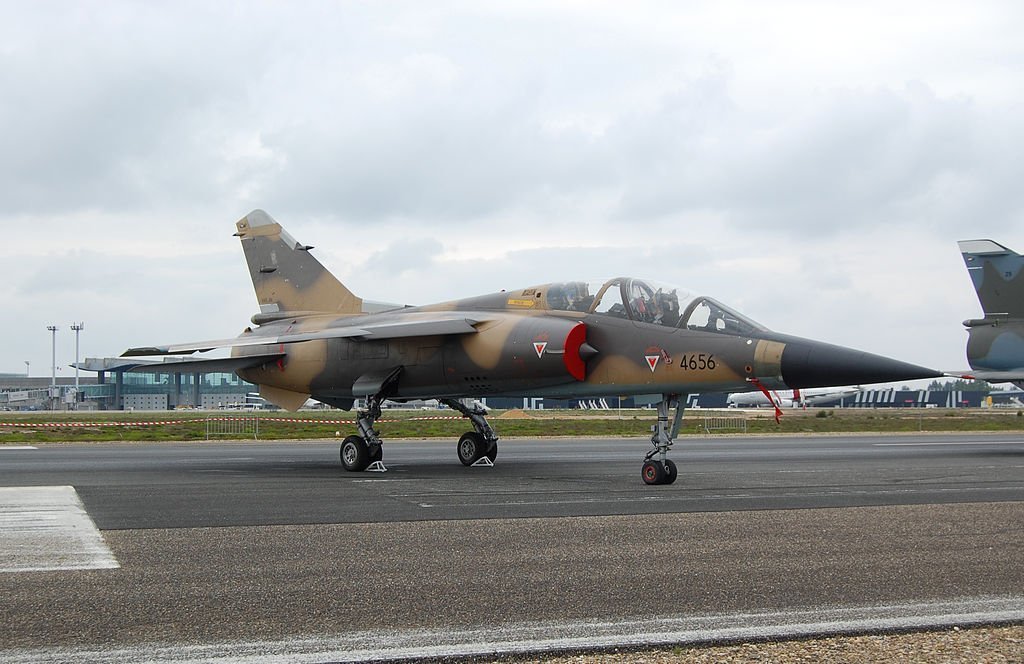
At the height of the ‘Tanker War’ in late 1986, Iraq flew a Dassault Falcon 50, operated for its General Military Intelligence Directorate (GMID), to Villaroche in France for an unusual modification. The business jet was equipped with the weapons system of the Mirage F.1EQ-5 fighter-bomber, including a Cyrano IVQ-C5 radar and two hardpoints for AM.39 Exocet anti-ship missiles. After returning to Iraq in February 1987, the aircraft underwent extensive testing before being deployed on its first, and ultimately only, combat mission. This is the story of that sortie.
Throughout 1985 and early 1986, Brigadier-General Mudher al-Farhan, director of the Iraqi Air Force (IrAF) Intelligence Department, gathered information on Iran’s tanker-shuttle operations. These shuttle tankers were oil carriers fitted with improved firefighting equipment and operated by specially trained crews. They traveled in convoys of four, escorted by warships of the Islamic Republic of Iran Navy. Each day at 1800hrs, al-Farhan briefed Major-General Sha’ban on the latest developments.
As Tom Cooper and Milos Sipos explain in their book Iraqi Mirages: The Dassault Mirage Family in Service with the Iraqi Air Force, 1981-1988, Sha’ban eventually realized that the Iraqi Air Force had no reconnaissance photographs of the new loading terminals in the lower Persian Gulf. About a week after the relevant report reached General Headquarters, two officers from the General Military Intelligence Directorate (GMID) visited his office with an unusual proposal. The intelligence service was prepared to make one of its Dassault Falcon 50 business jets available for a clandestine mission to visually inspect several potential targets.
Disguised as a business jet carrying “three wealthy Iraqi businessmen,” the Falcon 50 departed Amman, Jordan, on June 24, 1986. It flew through Iraq and Kuwait before continuing along the commercial corridor over the Persian Gulf toward Mumbai, India, carrying three experienced Mirage pilots and a professional photographer. During the flight, the crew made an “unintended navigational error” that brought the aircraft as close to Sirri as possible, allowing the photographer to capture a series of images.
The Iranians detected the overflight and responded by moving the T-14 Terminal farther south. Before they could complete the relocation, however, Iraqi aircraft attacked Sirri on August 12, 1986.
After reviewing the report, Sha’ban decided to use the same aircraft for an anti-shipping mission in the lower Persian Gulf. At his request, the Iraqi Air Force Technical Directorate, then led by Brigadier-General Attya, prepared a study proposing the installation of the Mirage F.1EQ-5’s Cyrano IV-C5 radar and fire-control system in a Falcon 50. Since the project exceeded the IrAF’s technical capabilities, Iraq sought assistance from the DIA in Paris.
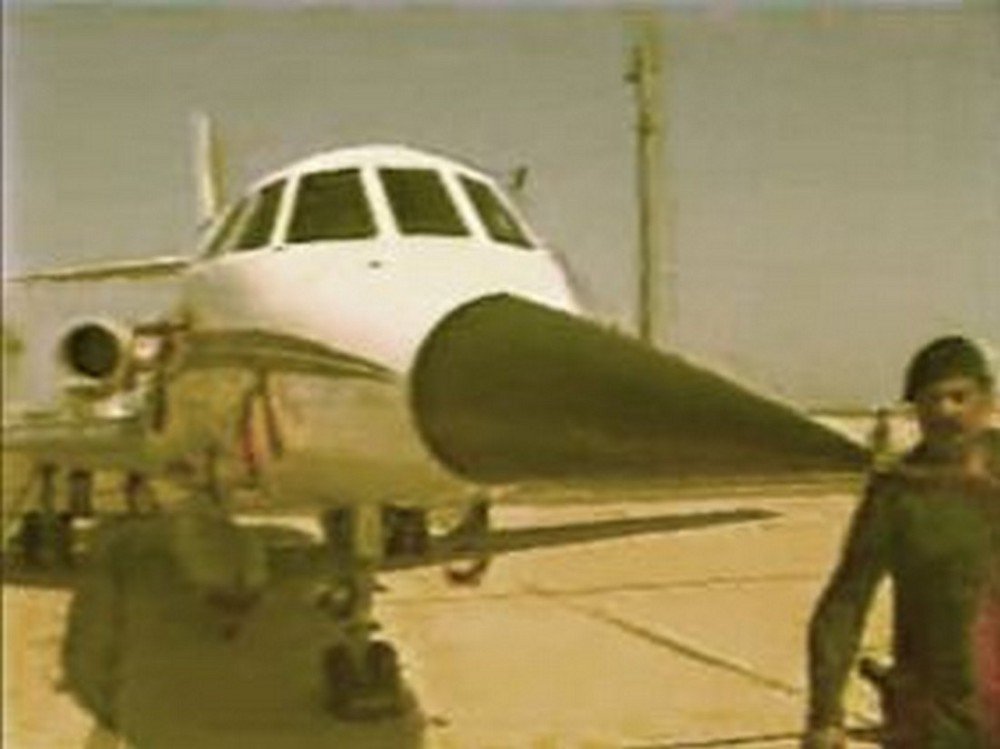
Following negotiations, the Falcon 50 registered YI-ALE was sent to France. During its conversion at Villaroche, it retained the standard controls on the left side of the cockpit, while the right side was fitted with a complete Mirage F.1EQ-5 cockpit. The external modifications were even more striking: the aircraft’s registration was removed, its nose was replaced with the pointed Mirage F.1 radome housing the Cyrano radar, and a launcher for an AM.39 Exocet missile was installed beneath each wing.
After completing extensive tests in France, the aircraft was flown back to Iraq on February 9, 1987, and entered Iraqi Air Force service six days later, reportedly under the designation “Yarmouk.” Within General Headquarters in Baghdad, it was known by the codename Suzanna.
Following a series of training flights, Suzanna’s crew received orders on the morning of May 17, 1987, to load two Exocet missiles and transfer to Wahda Air Base for an operation over the Persian Gulf.
The mission began early in the evening, with the aircraft escorted by two MiG-23s and two MiG-25s. After reaching the usual position north of Bahrain, the pilot turned left and handed control to his co-pilot, who operated the Mirage systems. Once they had identified a suitable target, the crew launched two Exocet missiles at 2108–2109, from ranges of 35 and 24 kilometres.
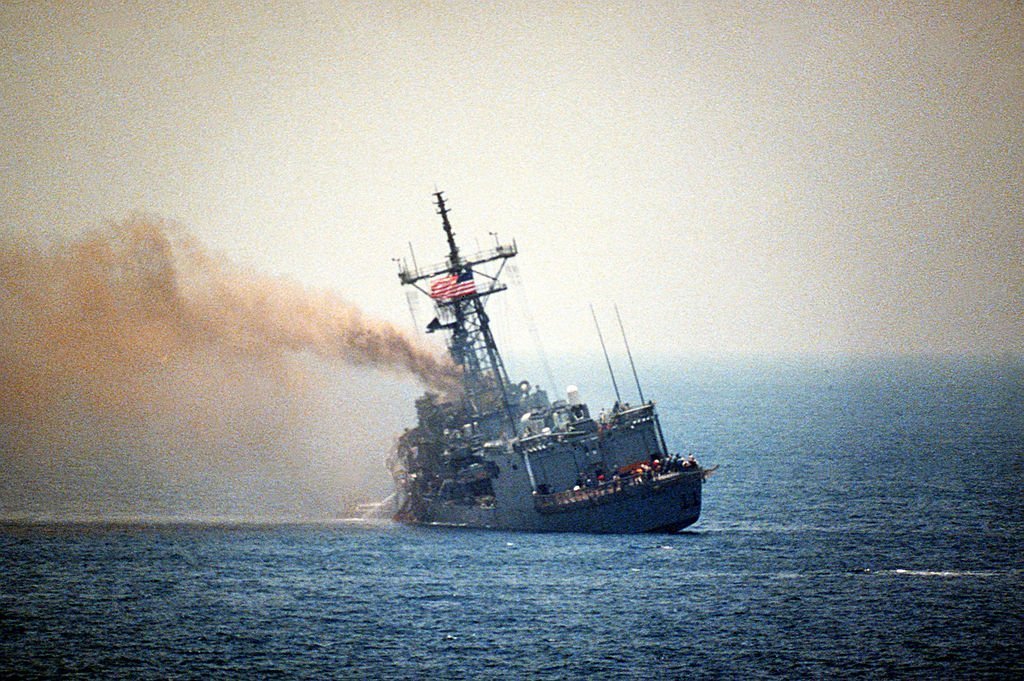
Both missiles struck the target, the US Navy frigate USS Stark (FFG-31), whose senior officers failed to recognize that the ship was under threat. The first missile did not detonate, but the second exploded, killing 37 sailors. Two Royal Saudi Air Force F-15Cs attempted to intercept the Iraqi aircraft as it headed north, after being directed to do so by the crew of an ELF-1 E-3A AWACS. Their effort was unsuccessful. Following the outbreak of war between Iran and Iraq in September 1980, four USAF E-3s had been deployed to Saudi Arabia under Operation ELF-1 to provide continuous airborne radar coverage and strengthen Saudi air defenses. The operation continued for more than eight years.
Shaken by the incident but aware of its seriousness, Baghdad apologized for the unintended attack and compensated the Pentagon and the families of the sailors killed for the resulting losses. The United States subsequently entered into an uneasy strategic relationship with Iraq. Under the pretext of improving coordination with the Iraqi military and preventing similar incidents, Washington began sharing intelligence on the movements of Iranian shuttle tankers in the lower Persian Gulf, among other forms of assistance.
Iraqi Mirages The Dassault Mirage Family in service with the Iraqi Air Force, 1981-1988 is published by Helion & Company Limited and is available to order here.
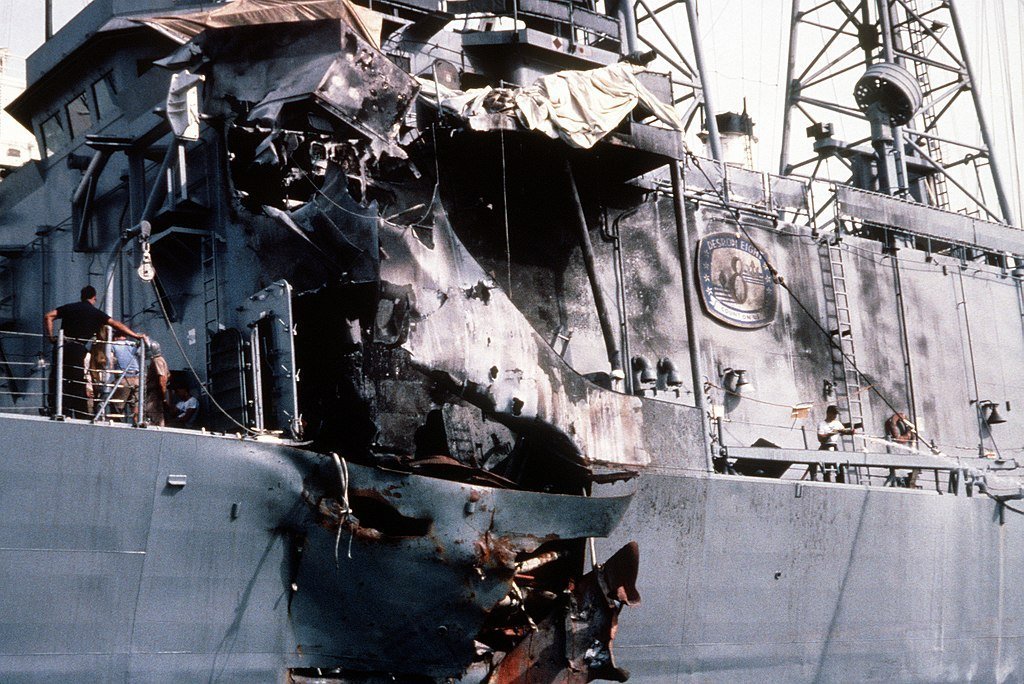
Photo by the U.S. Navy and PA via Wikipedia

