

Mercenary pilots were originally offered £4,000 annually, a considerable sum of money in 1966; later on, they got £10,000!
British mercenary pilots operated Saudi Arabia’s Lightning interceptors.
After protracted negotiations, Saudi Arabia signed a US$154 million agreement with the British Aircraft Corporation (BAC) and Airwork Services Ltd. in January 1966. The deal covered six BAC Lightning interceptors—four single-seat and two two-seat aircraft—as well as a battery of eight launchers for British-made Thunderbird Mk I surface-to-air missiles (SAMs). Several months later, a second contract was concluded for 22 additional Lightning F.Mk 53s, along with roughly the same number of BAC Strikemaster trainer and light-strike aircraft. The overall program, which also involved delivering the equipment and preparing the Royal Saudi Air Force units assigned to operate it, was conducted under the codename ‘Magic Carpet’.
According to Tom Cooper’s book Hot Skies Over Yemen, Volume 1: Aerial Warfare Over the Southern Arabian Peninsula, 1962–1994, Saudi Arabia had barely enough personnel to operate its existing RSAF units and lacked anyone qualified to fly or maintain the British fighters. To accelerate the process—and because Riyadh and London remained determined to keep pressuring the Egyptians during the 1962–1967 Yemen Civil War—it was decided to add four former RAF Hunter F.Mk 6s to the contract. The aircraft were refurbished and upgraded to the F.Mk 60 standard, while two two-seat T.Mk 7s were also included. They were to be operated by contracted British personnel, including former RAF pilots and ground crew from Britain and the Commonwealth recruited by English businessman Geoffrey Edwards.
The Hunters arrived in Riyadh in May 1966, accompanied by mercenary pilots. Initially offered £4,000 a year—a considerable salary at the time—the pilots later saw their pay rise to £10,000. They formed No. 6 Squadron.
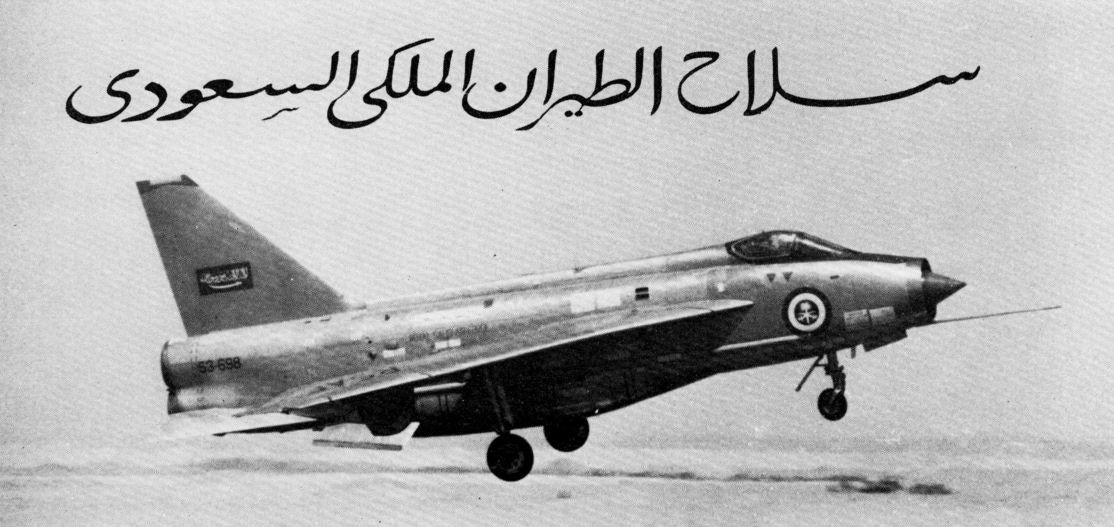
Deliveries of Lightnings to the Royal Saudi Air Force (RSAF) began on Aug. 7, 1967, when the first single-seat and two-seat aircraft arrived at Khamis Mushayt Air Base. However, these were not the F.Mk 53s originally ordered by Riyadh, which were still under construction. Instead, Britain hastily supplied five former RAF F.Mk 2s and a single T.Mk 4.
Two more single-seat aircraft arrived on Aug. 9, 1967, followed by two others about a week later. They were immediately assigned to No. 6 Squadron, but their crews could not begin type conversion because Avpin-fueled starters were unavailable and had to be adjusted for the airfield’s altitude. The issue was resolved by August, when two aircraft conducted a celebratory low pass over their new base. The maneuver shattered several windows, sent cement rendering falling from walls, and even woke the Saudi crash crew sleeping in a tent near the control tower. During the night of Sept. 16–17, the British commanding officer of No. 6 Squadron placed the unit on alert for the first time after the local radar station detected a Yemeni aircraft flying directly over Khamis Mushayt at medium altitude. A Thunderbird SAM was launched but missed; after passing overhead, the aircraft turned toward the Red Sea and disappeared. Three days later, on Sept. 20, British pilot Peter Hay crashed a Lightning F.Mk 52 during takeoff from Khamis Mushayt. He ejected in time but sustained back injuries.
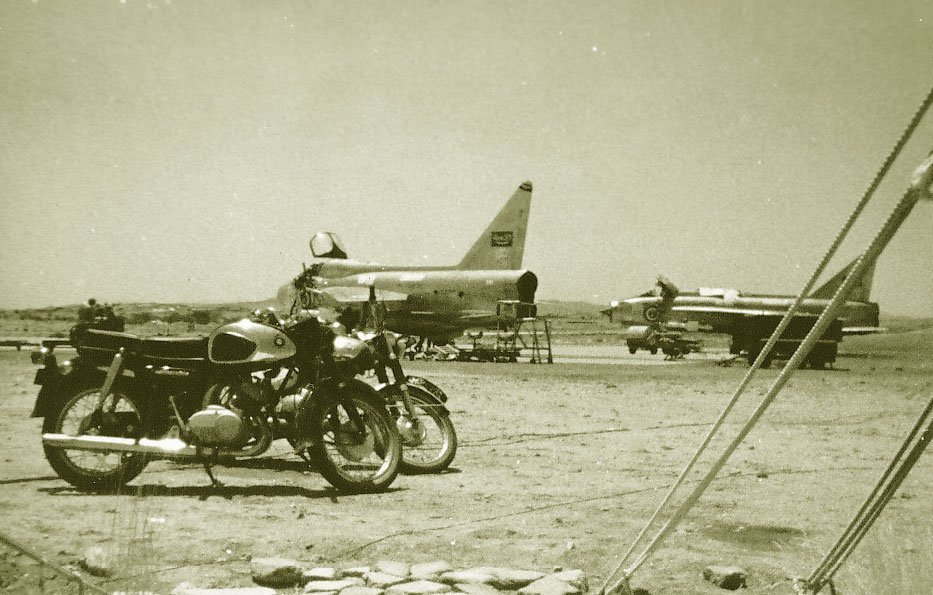
On Oct. 1, supplies of Avpin for the RSAF Lightnings deployed at Khamis Mushayt ran out, followed several days later by the supplies allocated to the Hunters. After an urgent resupply request, both types returned to service by mid-month. By then, a small liquid-oxygen plant had been installed at Khamis Mushayt, permanently resolving the problem. Another difficulty soon emerged: the British pilots assigned to No. 6 Squadron discovered that the RSAF personnel selected to fly and maintain the Lightnings required far more training than anticipated. Additional contract crews were therefore needed. Airwork ultimately had to recruit more British and Pakistani mercenaries to fly and service the Lightnings, while also establishing the extensive infrastructure required to operate the type in Saudi Arabia.
Although a Saudi lieutenant was nominally appointed commander of No. 6 Squadron, RSAF, in November 1967, the British pilots continued to have the final say—particularly after the unit was officially declared operational the following month. On Jan. 13, 1968, a Lightning was scrambled, followed by a Hunter, after an unidentified aircraft flew over Jizan, but neither aircraft made contact. Saudi generals also considered a possible strike against Yemeni air bases, yet no such mission was ever carried out. Instead, later that month, the squadron commander ordered his pilots to remain on 24-hour standby—not to defend Khamis Mushayt, but to evacuate their aircraft if the area came under attack. The Soviet presence in Yemen was clearly having a significant effect.
By the time Operation Magic Carpet officially ended on Mar. 31, 1968, the RSAF interceptors based at Khamis Mushayt Air Base had seen very little action. They flew barely enough to keep their Lightning and Hunter pilots current. Unsurprisingly, one of the single-seat aircraft was written off on Nov. 28 that year, when Saudi pilot Major Essa Ghimlas crashed at Khamis while practicing a single-engine approach.
Hot Skies Over Yemen Volume 1: Aerial Warfare over the Southern Arabian Peninsula, 1962-1994, is published by Helion & Company Limited and is available to order here.
Photo by RuthAS and Charles Lorimer “Vic” Wightman via Wikipedia

