

The Israel Defence Force/Air Force delayed their own mission long enough to get the machines it needed for the attack against Iraq’s Osirak nuclear reactor—the F-16 Netz
On June 7, 1981, Israel stunned the world by launching a daring attack on Iraq’s nuclear reactor at Al Tuwaitha, near Baghdad.
According to Bertie Simmonds in his book F-16 Fighting Falcon, the story began in 1976, when France sold Iraq an Osiris-class nuclear reactor. Known as ‘Osiraq’ or ‘Osirak’—the latter name used by the French—the facility was operated and maintained by both Iraqi and French personnel.
In the years that followed, persuasive arguments and direct evidence emerged suggesting that the tightly controlled reactor was not intended to support a nuclear-weapons programme. Instead, its stated purpose was to generate nuclear-powered electricity.
Concern over Iraq’s nuclear ambitions became more pronounced during the Iran-Iraq War, which began in 1980. On September 30 that year, Iranian McDonnell Douglas F-4E fighter-bombers attacked the facility during Operation Scorch Sword. Although the raid caused damage, it failed to destroy the Osirak reactor, and French technicians later returned to carry out repairs.
A subsequent reconnaissance mission by Iranian RF-4Es photographed the facility, and rumours circulated that the images had been passed to Israel. Throughout the late 1970s, Israel continued pursuing diplomatic efforts to stop the reactor’s development and operation, but those attempts failed. Reports also alleged that Israel turned to more covert measures, including planting bombs at the facility, issuing threats, and attempting to assassinate individuals associated with the Iraqi programme. By late 1979, Israeli Prime Minister Menachem Begin had apparently come to support a policy of launching a ‘first strike’ to eliminate the perceived threat posed by Iraq’s nuclear facility.
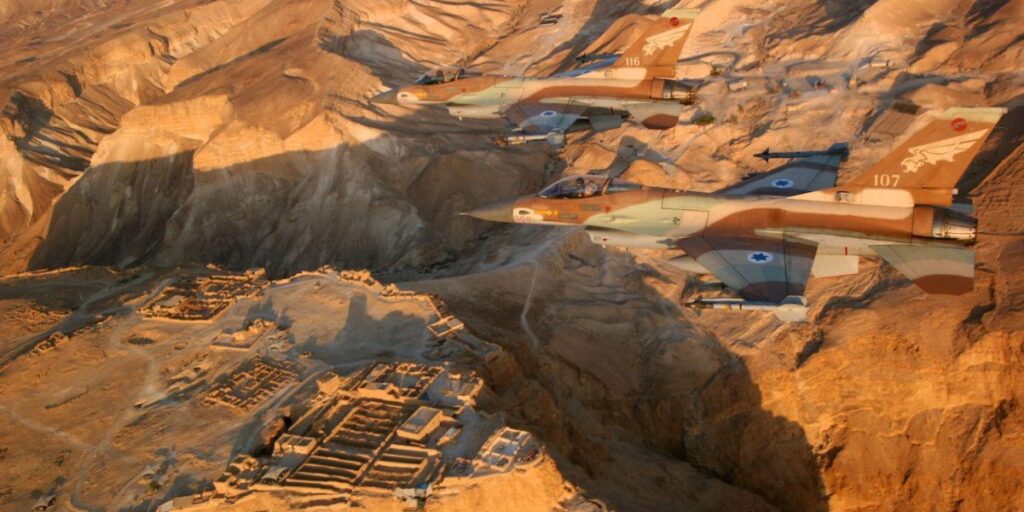
The Israel Defence Force and Israeli Air Force postponed the operation until enough of the aircraft required for the attack—the F-16 Netz—had been delivered. With deliveries averaging roughly four aircraft per month, it took time for the IAF to assemble the necessary fleet and spare aircraft. The plan called for approximately eight operational fighters, along with additional airframes available should any of the assigned aircraft become unserviceable.
The F-16 was selected because of its considerable range, which placed the target—around 700 miles from Israeli territory—barely within reach. The Netz could also carry the 2,000-pound Mk. 84 free-fall bomb, the IAF’s preferred weapon for the mission. In addition, the aircraft’s advanced weapons-delivery systems and Continuous Computed Impact Point (CCIP) imagery displayed on the head-up display were expected to improve accuracy during the low-level attack.
Once enough F-16 airframes were available, preparations for Operation Ofra—later known as Operation Opera—could begin in earnest.
Training commenced in the Negev Desert during the summer of 1980, where the Israelis constructed a replica of the reactor to familiarise the pilots with the facility they would be targeting. The first simulated attack took place on August 23, 1980, while cabinet approval for the mission was granted in October. A second simulated raid followed in November.
After months of intensive preparation, the IAF pilots had become highly proficient in operating their aircraft and delivering weapons accurately against the designated target. Finally, one day before the raid, Colonel Iftach Spector—who would take part in the mission—announced the date of the attack.
After months of training the IAF pilots were highly proficient in both their mounts and in being able to deliver weapons on the intended target. Eventually, one day before the attack, Colonel Iftach Spector — who was to participate in the raid himself — announced when they would be going.
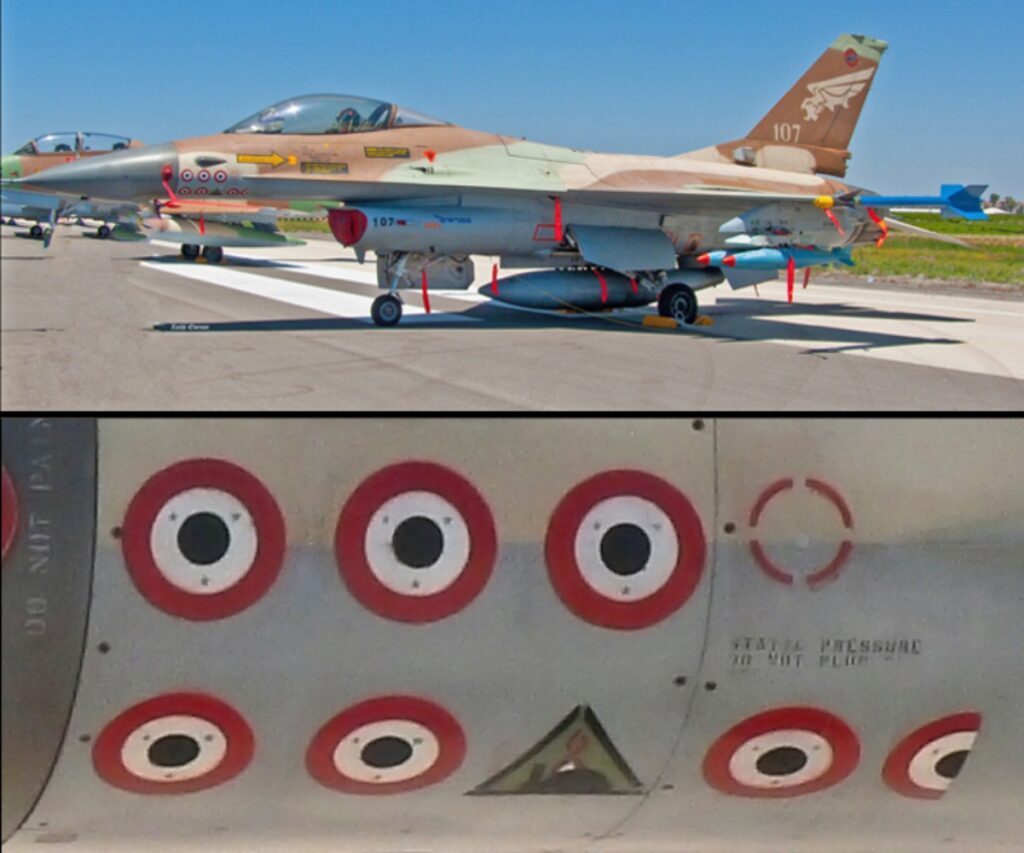
With the raid initially scheduled for November 1980 and later postponed until May 1981, the final date was eventually chosen. On Sunday, June 7, 1981, the operation was launched from Etzion Air Base, located 12 miles from Eilat on the Red Sea. Eight F-16 Netz fighters would carry out the attack, supported by six McDonnell Douglas F-15 Eagles. Recently delivered Grumman E-2C Hawkeyes and CH-53 Sea Stallions were assigned search-and-rescue duties in case any pilots were shot down—a possibility for which the IAF expected to suffer one or two losses. Each Netz carried two 2,000-pound Mk. 84 bombs, two wing-mounted external fuel tanks, a centerline tank, and two AIM-9 Sidewinders.
The mission presented a significant technical challenge because the fuel tanks had to be jettisoned while the aircraft were still carrying live bombs. Under normal circumstances, external weapons would be released before the fuel tanks, but the attack required the opposite sequence. Colonel Ze’ev Raz explained: “This is something that I don’t think is even done today. The problem is that the tanks are near the bombs and when you carry bombs on the wings you’re not allowed to jettison them until the bombs are dropped.” It is believed that the 16 wing tanks remain somewhere in the desert.
At 3 p.m. local time, the aircraft took off, setting the raid in motion. The F-16 Netz force consisted of aircraft and crews drawn from both Nos. 110 and 117 Squadrons. Strict discipline and radio silence were maintained throughout the mission. Despite concerns about whether the heavily loaded fighters could become airborne, the formation eventually staggered into the sky from Etzion.
Operating alone, the F-16s would have been vulnerable to enemy fighters. With the F-15s providing protection, however, the formation crossed northeastern Saudi Arabia and entered Iraq by an indirect route, often flying over vast, uninhabited stretches of desert. The route took the aircraft at low altitude across remote areas of Jordan and northern Saudi Arabia before they crossed into Iraqi airspace.
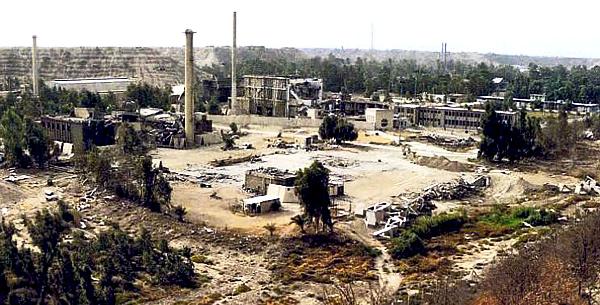
At approximately 5:30 p.m. local time, the formation separated, with the F-15 Eagles climbing sharply to provide cover for the attacking F-16s. Having burned off fuel and jettisoned their wing tanks, the Netz pilots also gained altitude to locate the target. From higher up, they were able to identify the Osirak reactor clearly. Its dome was unmistakable, measuring about 60 feet across and roughly 11 feet thick.
The attack began at around 5:35 p.m. The first section was led by Ze’ev Raz in F-16 Netz 113, accompanied by Amos Yadlin in the historic Netz 107. ‘Doobi’ Yoffe and Colonel Relik Shafir, deputy commander of 117 Squadron, followed close behind in Netz 129. The remaining four aircraft trailed the lead section. According to reports, the weapons were delivered in two waves, each consisting of two pairs of Netz fighters. About 10 miles from the reactor, the aircraft climbed from ground level to just below 10,000 feet before releasing their bombs in a 35-degree dive at approximately 600 knots.
Commander Ze’ev Raz recalled: “We knew they should have been able to see us 15 minutes before we got there, but their attention was on the east not the west. We dropped our ordnance and saw nothing fired at us. After two minutes at low level we climbed to 40,000ft and still they didn’t attack us. We saw no fighters and were surprised and even a little disappointed.”
Some accounts state that all 16 Mk. 84 bombs struck the reactor, although one failed to detonate. Other reports suggest that one or two bombs failed to explode, while another missed the facility entirely. Regardless, the attack was an outstanding feat of airmanship. It was widely believed that just two Mk. 84 bombs could destroy the reactor, yet the Israeli aircraft remained over the target for only about 90 seconds. Aside from sporadic anti-aircraft fire and reported surface-to-air missile launches aimed at the second element led by Amir Nachumi, the Iraqi defenders did little to disrupt the raid.
The attacking aircraft are believed to have used chaff and other countermeasures while leaving the target area. Some reports also claimed that Iraqi targeting radars had been switched off because their operators were away on a break. Whatever the reason, all eight F-16 Netz fighters regrouped with the F-15 Eagles and began the flight home without suffering any losses.
There were also rumours that, as part of an intelligence-sharing arrangement, Israel had been promised a safe haven in Iran for any aircraft damaged during the raid and unable to complete the journey home. Whether or not that agreement existed, it was never required. Saddam Hussein was reportedly so angered by the failure to intercept the Israeli force that several senior Iraqi Air Force officers were executed. Reports also stated that 10 Iraqis and a French civilian engineer, Damien Chaussepied, were killed. Later in 1981, the Israeli government reportedly paid compensation to Chaussepied’s family.
After a three-hour flight without interception, the aircraft landed at Etzion and were soon returned to their parent units. Although the raid was publicly condemned around the world, several Middle Eastern and Western governments were believed to have privately supported it. The United States also criticised the attack, despite reportedly providing intelligence from spy satellites. President Ronald Reagan was said to have been shocked when he first heard the news, asking, “They did what?” He then reportedly added, “Well, boys will be boys.” Most of his senior advisers opposed the operation, including Vice President George H. W. Bush. US Secretary of State Alexander Haig, however, offered a very different assessment: “Mr President, before this is over, we will be on our knees thanking God Israel did what it did.”
F-16 Fighting Falcon is published by Mortons Books and is available to order here.
Photo by Weapons and Warfare, Mike Guardia YouTube Channel, Zachi Evenor and User:MathKnight, Israel Defense Forces and Joyce Battle and William Burr via Wikipedia


