

“Shul’s narrative of flight at or above Mach 3.5 is so far the most detailed evidence available of SR-71 top speeds,” said Tim Yarrow, electrical engineer at Lockheed’s Skunk Works from 1974 to 1994
The SR-71 reconnaissance aircraft was the fastest jet-powered aircraft ever built and the most advanced member of the Blackbird family, developed by Lockheed Aircraft Corporation’s secretive “Skunk Works” division. During its 24 years of service with the U.S. Air Force, the aircraft accumulated nearly 2,800 flight hours. It was designed to penetrate deep into hostile territory while evading interception through its exceptional speed and operating altitude.
Throughout its operational career, the SR-71 gathered intelligence during the 1973 Yom Kippur War, Israel’s 1982 invasion of Lebanon, the 1986 U.S. raid on Libya, and the discovery of Iranian Silkworm missile batteries in 1987. The U.S. Air Force ended SR-71 operations in January 1990.
The Blackbird was built to cruise at “Mach 3+,” meaning more than three times the speed of sound, or over 2,200 miles per hour, while operating at altitudes of up to 85,000 feet.
As explained previously, one of the most frequently asked questions about the SR-71 concerns its true maximum speed and altitude.
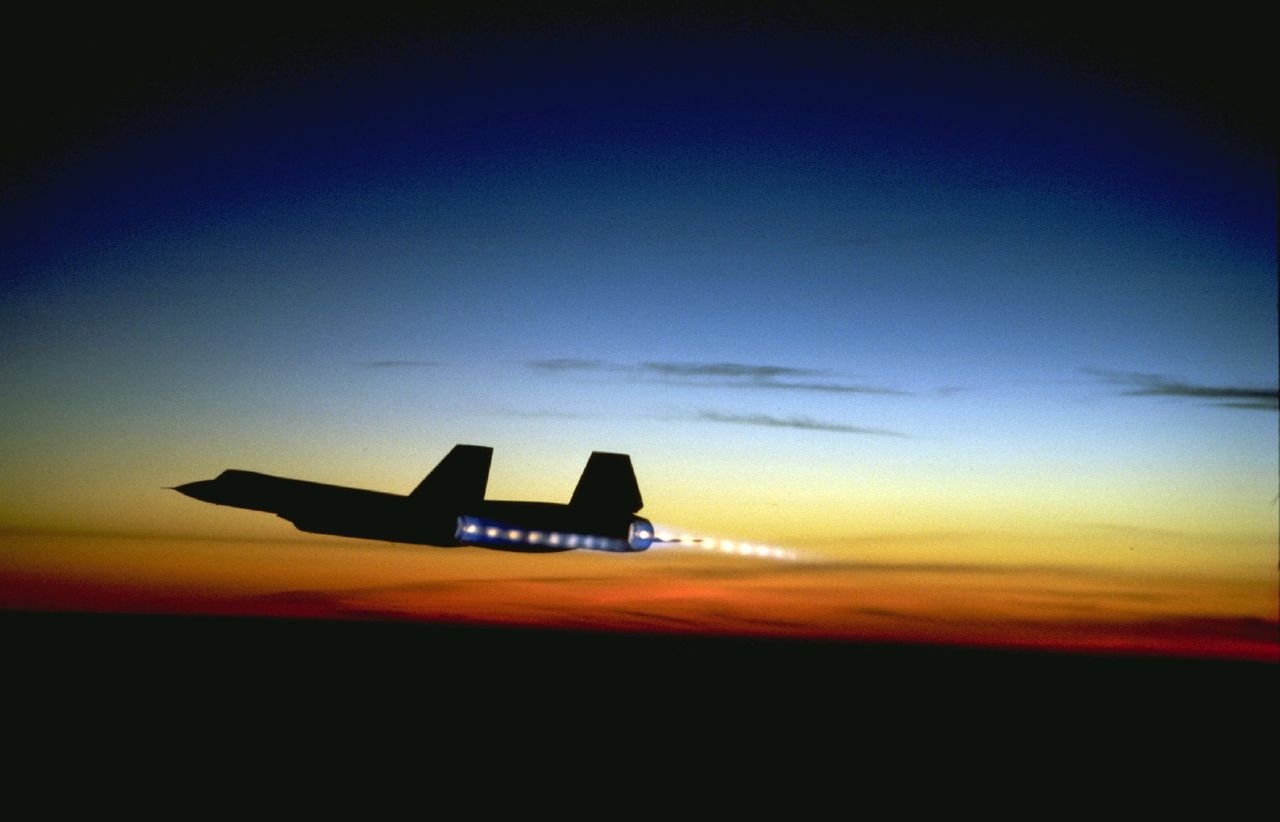
Tim Yarrow, an aviation research and analysis expert who worked as an electrical engineer at Skunk Works from 1974 to 1994, recalls that the Blackbird’s actual performance was faster than widely published, even though its official cruise speed was listed as Mach 3.2.
He explained that, in April 1986, Blackbird pilot Brian Shul conducted a surveillance mission over Tripoli, Libya, to obtain photographic evidence for bomb damage assessment following a U.S. bombing raid carried out in retaliation for the Qaddafi-sponsored terrorist attack on a Berlin disco. Because satellites could not be tasked immediately to photograph Tripoli, the mission highlighted the original purpose for which the SR-71 had been designed decades earlier.
Yarrow noted that the situation was different by 1986 because missile technology had advanced considerably, and Libya possessed improved weapons. As the Blackbird crossed the “Line of Death” into Libyan airspace, Shul’s co-pilot warned that ground-based missiles had been launched. They believed the missiles were Russian surface-to-air weapons capable of reaching speeds of Mach 5, which Yarrow described as likely being the only threat feared by Blackbird pilots.
He emphasized that the SR-71’s only defenses were its speed and altitude.
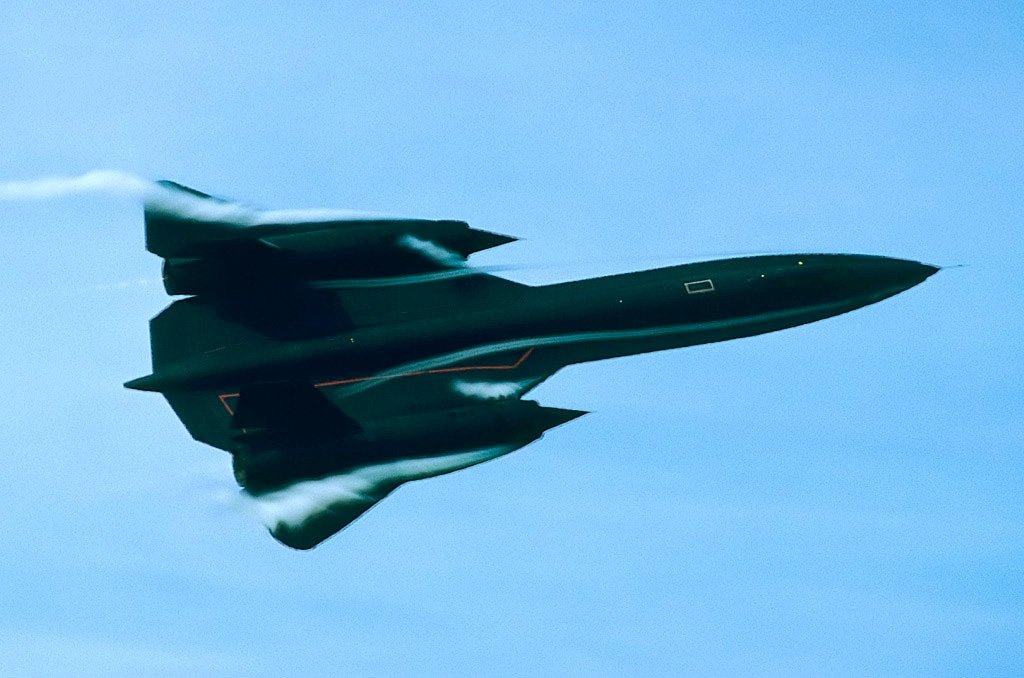
Yarrow explained that flying at Mach 3.2 at an altitude of 80,000 feet already gave the SR-71 a considerable advantage.
He reported that Shul and his co-pilot calculated they could just complete their turn over Libya and accomplish the surveillance mission, but only by increasing their speed. Since Blackbird missions were planned down to the second, with precise calculations for speed, altitude, and fuel consumption, exceeding Mach 3.2 was a pilot safety decision made outside the original flight plan.
According to Yarrow, the aircraft performed flawlessly that day and delivered the additional speed requested by its crew. He said the SR-71 responded with smooth, confident power, achieving a level of performance that had previously been the subject of speculation and theory.
Yarrow noted that, in his book Sled Driver, Shul described detecting additional missile launches as the aircraft’s speed eased to Mach 3.5. Shul then pushed the throttles fully forward against their stops while maintaining a climb of 500 feet per minute, equivalent to a pitch increase of roughly one-sixth of a degree, as the aircraft accelerated toward the turning point. Despite the extreme performance, the engines reportedly remained relatively cool.
Yarrow then quoted an excerpt from Shul’s book. After several agonizingly long seconds, co-pilot Walter suggested that Shul might want to reduce the throttle. Shul realized that he had left the throttles fully forward and that the aircraft was covering a mile every 1.6 seconds, well beyond its Mach 3.2 limit. He described it as the fastest the aircraft had ever flown.
Yarrow continued by explaining that the crew took the photographs and made the turn before Shul reduced the throttle, doing so only after the blue Mediterranean was safely outside the aircraft’s window. He stressed that the aircraft was not a modified or specially enhanced version of the SR-71, but a standard Blackbird that had been properly maintained and flown at peak performance. Yarrow therefore presumed that debate would continue over the aircraft’s true maximum speed. He suggested that, if the SR-71 was capable of flying much faster than Mach 3.5, that information remained a closely guarded secret, possibly for national security reasons. He added that Shul’s account of flying at or above Mach 3.5 was the most detailed evidence then available concerning the SR-71’s top speed.
Yarrow also explained how the SR-71’s Pratt & Whitney J58 engines operated. At high speed, the engines functioned more like ramjets than conventional turbojets and became more efficient as the aircraft accelerated. He noted, however, that the engine inlet and exhaust temperatures had to be monitored carefully to ensure they remained within design limits. In this operating mode, each engine consumed more than 100,000 cubic feet of air per second. Yarrow explained that the engine spikes could retract 26 inches into the nacelles, while all inlet doors remained closed except for the primary inlet and exhaust openings. At startup, takeoff, and speeds up to Mach 1.5, the spikes were extended fully forward. Above Mach 1.5, they retracted incrementally at a rate of 1.6 inches for every 0.1 increase in Mach number, reaching their full 26-inch retraction at Mach 3.2. This mechanism captured the normal shock wave inside the engine inlet and slowed the air to subsonic speed before it entered the compressor stages. Yarrow described this as the much-discussed ram effect that took place at and above Mach 3.2, emphasizing that it was based on technology developed during the 1950s.
Photo by U.S. Air Force


