

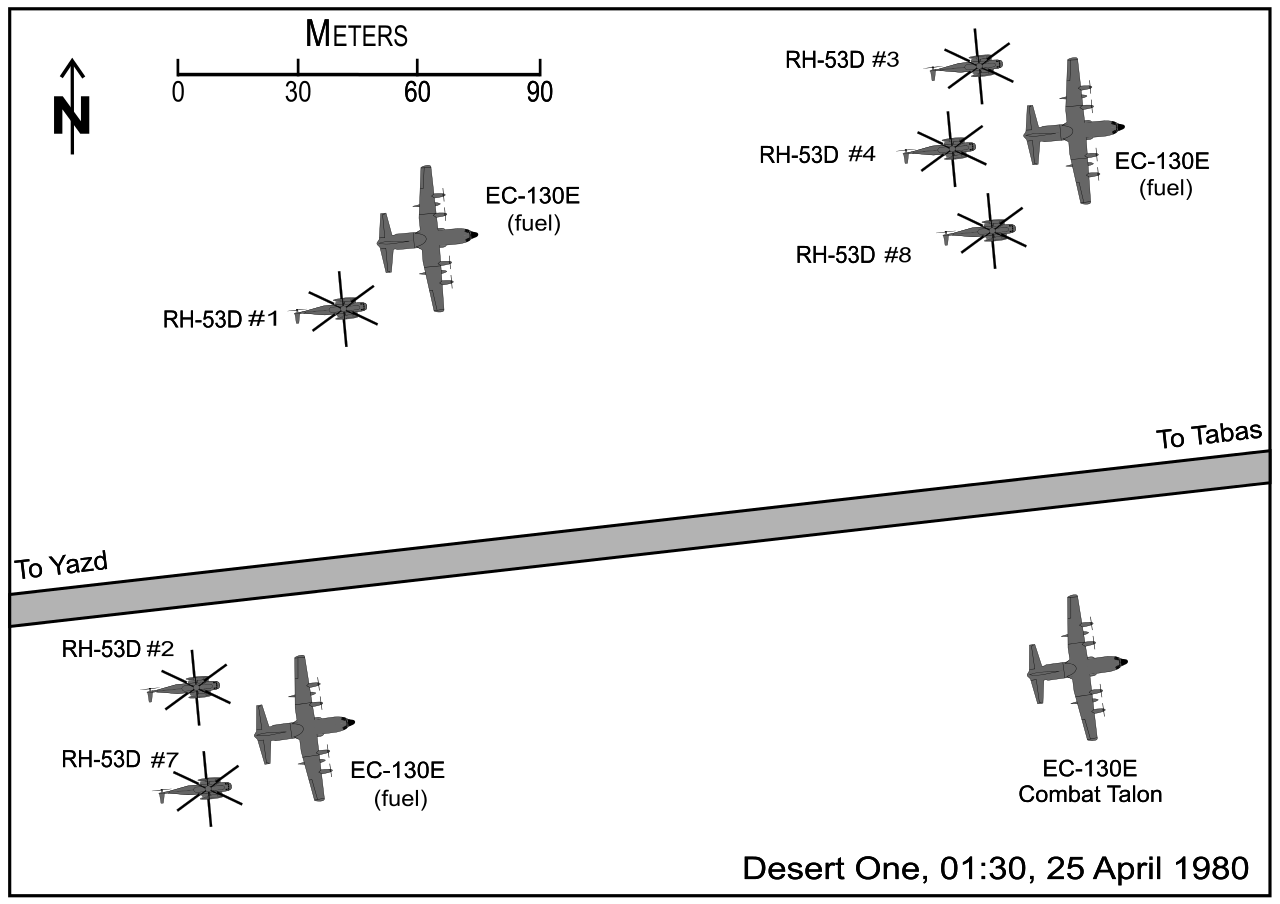
‘Then “bang,” I heard a noise from the front port side. The helicopter first hit our vertical stabilizer, then the propellers of engines number 1 and 2, and came to rest adjacent to the cockpit on the left side, with the helicopter’s cockpit sitting on top of the EC-130E,’ Delta Operator Staff Sergeant Mike R. Vining.
Operation Eagle Claw was a United States military mission ordered by President Jimmy Carter to resolve the Iran hostage crisis by rescuing 52 American embassy staff members held at the U.S. Embassy in Tehran on April 24, 1980.
In the weeks leading up to the mission, USAF combat controllers secretly entered Iran to set up the Desert One landing zone, a remote location about 200 miles southeast of Tehran. This mission, among the first undertaken by Delta Force, also included the unit’s founder, Colonel Charlie Beckwith.
The mission got underway when the first MC-130, carrying the mission commander and USAF combat controllers, reached Desert One. The controllers were responsible for setting up the airstrips and directing the aircraft after they landed. Almost immediately after that first MC-130 arrived, the operation began to fall apart. A passenger bus soon drove along the highway that cut through the landing area, forcing the advance team to stop it and detain the 45 people on board.
Shortly afterward, a fuel truck came down the highway. When it refused to stop, the Americans fired a light anti-tank weapon, igniting the tanker and illuminating the area. Not long after, a pickup truck approached, then quickly turned around and left. Despite these incidents, the assault team leaders chose to press on with the mission. The remaining five MC-130s soon arrived at Desert One to await the helicopters. The RH-53 helicopters launched from the Nimitz and headed toward Desert One. During the flight, two helicopters had to turn back due to instrument and mechanical failures, while the pilot of a third aircraft decided to continue despite hydraulic issues. The six remaining helicopters then ran into an unexpected, intense dust storm and were forced to continue individually to Desert One, reaching the site almost an hour behind schedule.
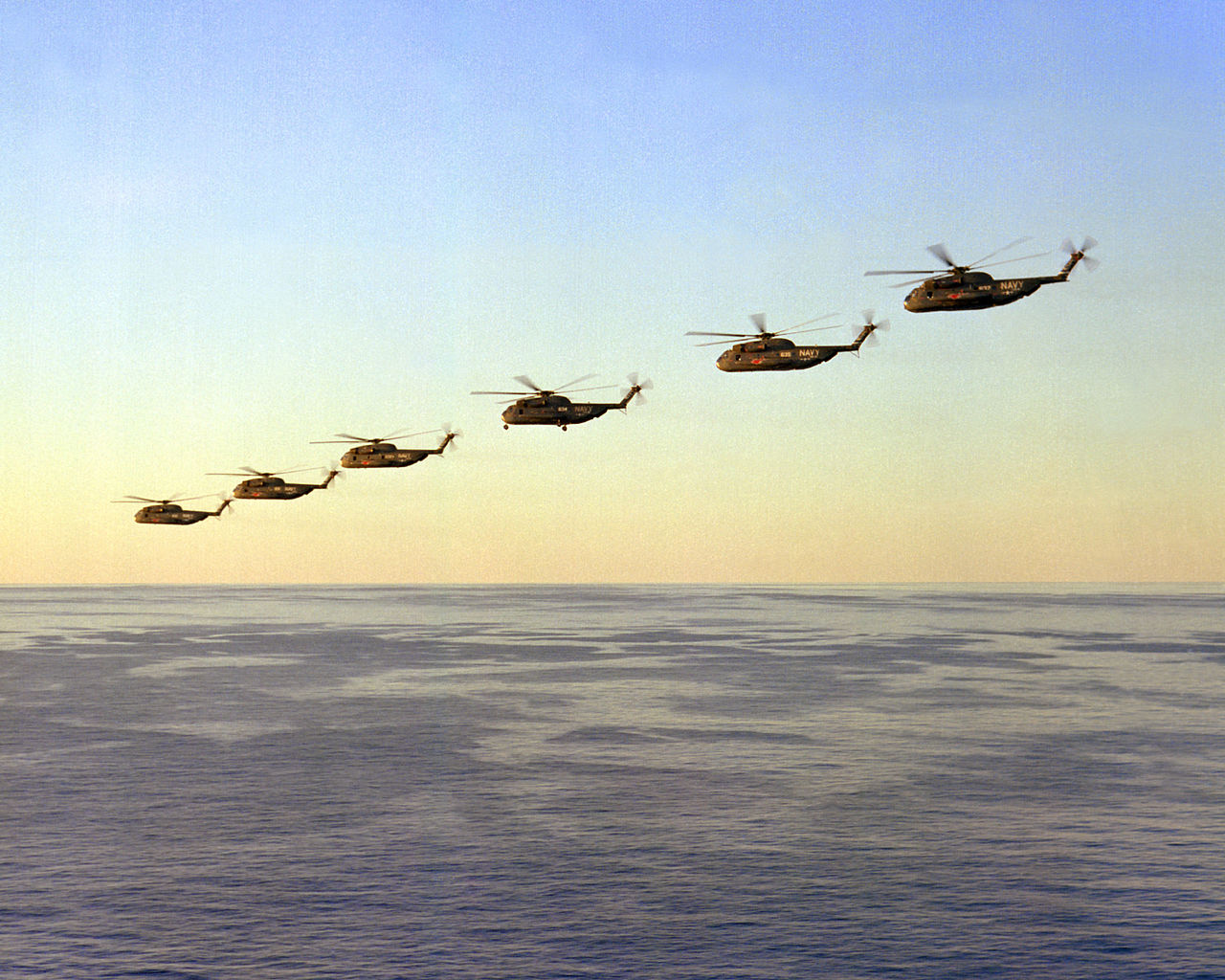
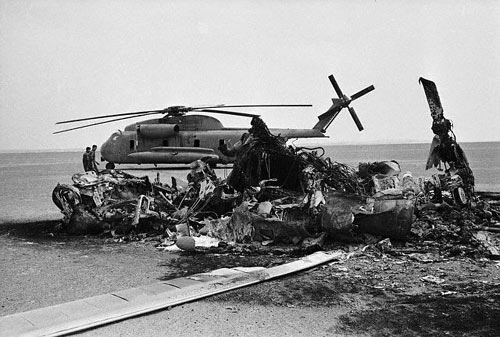
When the RH-53 with hydraulic issues reached Desert One, it was found to be beyond repair, leaving the force short of the minimum number of helicopters needed to transport both the assault team and the hostages. With only five helicopters remaining, the on-site commander called off the mission. The focus then shifted to loading the assault force back onto the MC-130s while the helicopters refueled and prepared to return to the Nimitz. At that moment, disaster struck: one of the helicopter’s rotor blades accidentally struck a fuel-laden EC-130. The resulting explosion destroyed both aircraft and killed five airmen aboard the EC-130 and three Marines on the RH-53.
Delta operator Staff Sergeant Mike R. Vining recounts the events in Justin Williamson’s book Operation Eagle Claw 1980:
‘Then “bang.” I heard a noise from the front port side. The helicopter first hit our vertical stabilizer, then the propellers of engine number 1 and 2, and came to rest adjacent to the cockpit on the left side, with the helicopter’s cockpit sitting on top of the EC-130E. To those watching, we had completely disappeared in a fireball. Flames reached 300 ft and more into the air. The helicopter’s internal auxiliary tank ruptured and ignited. I looked towards the cockpit and saw flames near the upper part of the cockpit (the helicopter blade tore through the top of the aircraft). The left front galley door blew in. In an instant, the cockpit was filled with flames, and flames were shooting along the ceiling. The force of the fireball forced the galley door down onto the flight deck. Chris Abel stood up and said, “Haul ass,” and then fell down. The aircraft had 33 of our team members on it with an aircraft crew of eight. I saw what appeared to be a person moving around in the cockpit area. This area was full of flames. I looked to the rear and saw people trying to open the rear paratrooper door. Sergeant James W. McClain Jr., the loadmaster, opened the port rear paratrooper door, but there was nothing but flames coming in, so he closed it with the help of Major Logan B. Fitch, the White Element commander and the commander of B Squadron. I thought, “Oh, God, is it going to end like this?” Major Fitch ordered the loadmaster to open the ramp, but the ramp area was also in flames.
‘After several attempts, the rear starboard door was open. It became crowded with people. Airman First Class Hyram L. Walton went through the door and was knocked down by other people, so he rolled under the aircraft. When the rear starboard door was opened, the flames inside increased (due to the draft it created). Flames were spreading from the ceiling and down the sides of the interior. I thought about getting my weapon and equipment. People were moving rearward, and the fire was increasing. Technical Sergeant Kenneth L. “Ken” Bancroft helped a man who had been knocked down in the rush for the door. So there wasn’t time to grab any of my equipment or my weapon. I could hear someone (probably Sergeant Major Chaney) yell, “Don’t panic!”—this was repeated by other people, and it seemed to work. I moved directly to the open door, and I was close to being the last one out. Fitch and Chaney had figured that not everyone would make it, and it was time for them to get out. When I went out, I dove out headfirst.
‘There was nothing but a wall of flames in the doorway. The propellers were still turning at full throttle—this fed the fire and caused an envelope of flames to surround the aircraft’s fuselage, and hot metal was flying through the air. I fell six feet to the ground and rolled; my hand hit a piece of metal, and it burned my fingers. I saw people’s feet going by me. I got to my feet, and I could hear the sound of small arms cooking off inside the aircraft. I ran, and I could hear explosions coming from inside the aircraft from the 40mm HE, M67 fragmentation grenades, and M72 LAWs. I didn’t know what to do. Staff Sergeant Joseph J. “Joe” Byers III, a radio operator behind the cockpit of the EC-130E, and the third pilot were the only two from the flight deck to escape. They escaped down the flight of stairs from the cockpit, crawling across the fuel bladder on hands and knees. They made it to the door and jumped out.
‘Thirty-eight personnel escaped the crash: two Marine pilots, three airmen, and 33 from Delta. I saw one of the Redeye missiles we had onboard shoot through the aircraft’s nose and fly out into the desert. The fuel bladder finally ignited, and a huge pillar of flame shot skyward in a loud explosion that buckled the aircraft. I saw people going to another EC-130E, so I went too. The people on the aircraft were waving us away (I guess they were full). Later, I learned they were trying to get away from the inferno. I ran to another EC-130E, which was parked next to our exploding EC-130E.’
The commanders ordered the remaining helicopters to be left behind and directed everyone to board the EC-130s, which then took off for Masirah Island.
This marked the end of Operation Eagle Claw. President Carter was informed of the mission’s failure, and the Iranian government broadcast images of the Desert One wreckage to the world. During the final months of his administration, Carter continued efforts to secure the hostages’ freedom; however, Iran did not release them until Jan. 20, 1981, the day President Ronald W. Reagan was inaugurated.
Eagle Claw 1980 is published by Osprey Publishing and is available to order here.
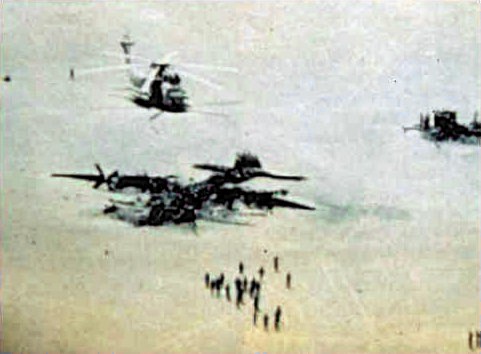
Photo by U.S. DoD

