

Uzbekistan to become J-10C’s second customer
Uzbekistan is set to become the second foreign operator of China’s J-10C fighter, following Pakistan, the first country to acquire the “Vigorous Dragon,” according to a report broadcast on Uzbek television.
As the photographs in this article illustrate, the J-10 bears a striking resemblance to Israel’s Lavi fighter, developed by Israel Aerospace Industries (IAI) before production was halted by a government decision in 1988.
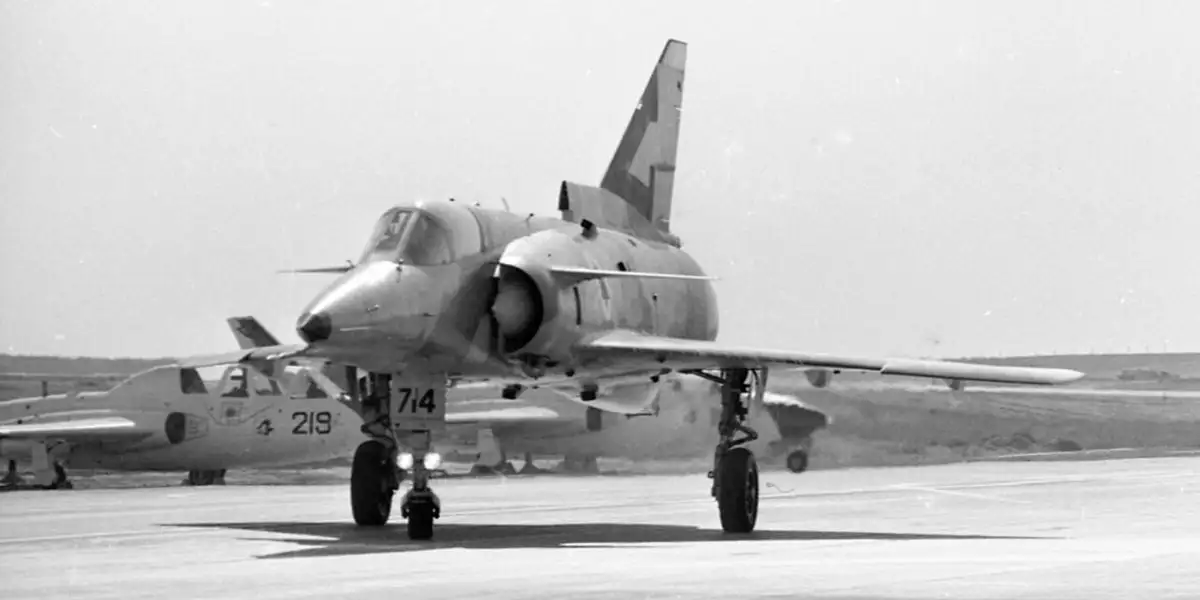
Kfir
Designed as an improved derivative of the Dassault Mirage III and powered by the General Electric J79 engine used in the F-4 Phantom II, the IAI Kfir, or “Lion Cub,” made its first flight on October 19, 1970.
The Kfir-C1 first flew in June 1973 and incorporated a range of Israeli-developed avionics. Although initially built for the Israeli Air Force, the aircraft was later exported under the name Dagger. A total of 27 Kfir-C1s entered limited production, equipping two squadrons from 1974 while Israel awaited more advanced variants.
Introduced in 1976 following its first flight in 1974, the Kfir-C2 represented a significantly improved version of the aircraft. It was intended to remain effective against a wide range of threats into the 1990s. Aerodynamic refinements gave the fighter impressive combat performance, including sustained maneuverability and enhanced control response. The Kfir-C2 could be distinguished from the C1 by its dog-toothed outer wing panels, small strakes beneath the nose and, most notably, swept-delta canard foreplanes.
Introduced in 1983, the Kfir-C7 was the final single-seat variant. It was based on the Kfir-C2 but used a specially modified J79-GEJ1E engine that provided an additional 1,000 pounds of afterburning thrust. The aircraft also featured two additional hardpoints and advanced capabilities, including the ability to carry and deploy precision-guided “smart” weapons.
Extension of the Kfir work
As Bill Norton recounts in 75 Years of the Israeli Air Force, Volume 2, Israel was keen to maintain a domestic fighter-bomber design and production capability after Kfir production ended in 1986 with 212 aircraft completed. The aim was to preserve a degree of independence from foreign suppliers while supporting the national economy. By then, Israel’s aircraft-manufacturing sector had expanded beyond the Kfir, with the production of a business jet and a light transport aircraft. IAI had also developed expertise in creating specialized upgrade components for older aircraft and commercial airliners, while offset agreements with American companies and Israeli content incorporated into foreign-built products further strengthened the industry.
By 1980, arms exports accounted for 30 percent of Israel’s national exports and supported between 20 and 25 percent of the workforce. Against this background, IAI began developing a new fighter, refining the design as it received input from the Israeli Air Force.
Building on the Kfir program, the project evolved into a single-engine, delta-wing aircraft equipped with canards and designated the Lavi, meaning “Young Lion.” Its future depended partly on other procurement plans, particularly the Israeli Air Force’s consideration of a substantial order for a specialized strike version of the F-18. When that proposal lost momentum in 1979 and 1980, the Ministry of Defense encouraged the Air Force to evaluate IAI’s design. The Lavi was intended to replace the A-4 and Kfir within a decade as the lower-cost component of a high-low force structure. A two-seat version was also planned to replace the TA-4 in the advanced training role.
The Lavi received formal approval in 1980, with an estimated budget of $1.8 billion. Full-scale development began in late 1982. The program called for 240 single-seat and 60 two-seat aircraft, with production projected to peak at 30 to 36 aircraft per month. Unit costs were estimated at between $10.8 million and $30 million.
The Lavi
Recognizing that low-cost fighters such as the Kfir were becoming less relevant on the modern battlefield and might have limited survivability, the Lavi evolved into a highly integrated multirole fighter-bomber. It incorporated extensive avionics, along with advanced electronic flight and engine-control systems comparable to those used in contemporary aircraft elsewhere. These increasingly ambitious requirements raised the program’s technological risk, drove up costs, and extended the development schedule.
By 1983, funding was becoming increasingly difficult to secure. However, the pro-Israel lobby in the United States succeeded in obtaining American aid for the Lavi, representing a significant departure from established U.S. policy. American involvement subsequently expanded, with U.S. companies contributing to the aircraft’s design and expected to manufacture half of the aircraft. As with the Kfir, this arrangement meant that Lavi exports would be restricted to countries approved by the United States.
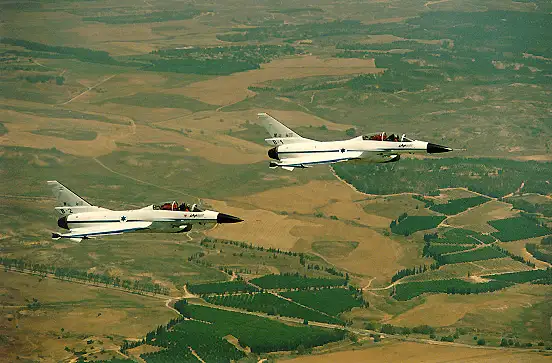
The first Lavi prototype made its maiden flight on December 31, 1986, roughly a year behind schedule and significantly over budget. Initial deliveries were not expected before 1991. To contain costs, the planned production rate was reduced, while the Israeli Air Force scaled back its projected order. These measures pushed the estimated unit price as high as $50 million.
There were growing concerns that the aircraft would not achieve full operational capability or squadron readiness in time to meet the Air Force’s requirements. By 1987, Israel had already spent $2 billion on the Lavi, even though production had not yet started, while the country was experiencing inflation of more than 1,000 percent.
Approximately 90 percent of the program was financed through American military aid. At the same time, U.S. manufacturers objected to taxpayer funding for an aircraft that could compete with their own products.
Lavi cancellation led Israel to help China develop the J-10
Although the United States acknowledged that Israel could decide how to use the aid, American officials warned about the long-term consequences of such substantial spending. They proposed alternatives, including the joint production of an American fighter aircraft. Many Israelis viewed these suggestions as motivated primarily by U.S. self-interest.
As the Lavi program began consuming 25 percent of American aid, support within Israel weakened. The General Staff grew more cautious, some Israeli Air Force officers expressed reservations, and the Knesset became deeply divided. A heated national debate followed, with concerns that funding the Lavi would severely undermine other defense and national priorities. It was one of the first times that lawmakers and numerous senior government officials openly challenged a major Ministry of Defense program.
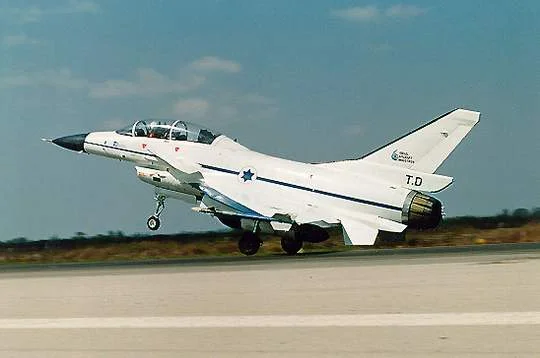
In August 1987, Israel’s cabinet voted by a single majority to cancel the Lavi program. The decision effectively acknowledged the United States’ dominant influence over Israeli defense procurement, since Israel had to take Washington’s likely reaction into account when making major military decisions. The cancellation dealt a severe blow to Israel’s aerospace industry, which struggled for years afterward. Cooperation with the People’s Republic of China on the development of the J-10 fighter helped ease some of the resulting losses.
The United States later determined that this cooperation involved the unauthorized transfer of American technology provided during the Lavi’s development. The dispute created serious tensions between the two countries, prompting Washington to suspend technology transfers to Israel temporarily.
75 Years of the Israeli Air Force Volume 1 is published by Helion & Company and is available to order here.

Photo credit: Retxham via Wikipedia and U.S. Navy, Danny Gotfried / Dan Hadani collection / National Library of Israel / The Pritzker Family National Photography Collection via Wikipedia

