

While the Soviet SAMs, AAA, and Russian advisors had a lot to do with shooting down 15 B-52s and damaging several more, some guilty ones on the US side of the war also helped to cause B-52s to get shot down
In response to North Vietnam’s 1972 Easter Offensive into South Vietnam, President Nixon suspended peace talks on May 8 and launched Operation Linebacker, which renewed bombing raids over North Vietnam and included the mining of its harbors and rivers from the air. When North Vietnam appeared ready to resume negotiations in October, Nixon again called a halt to the bombing. However, North Vietnam resisted for two more months over the terms of a cease-fire. Nixon then removed the safe havens and ordered the heaviest bombing campaign of the war against Hanoi and Haiphong: Operation Linebacker II.
Beginning on Dec. 18, the USAF struck military and transportation targets with B-52s and tactical fighters. After 11 days of heavy bombing, the North Vietnamese finally agreed to return to the peace table in Paris. As a result, US air attacks on North Vietnam were limited to areas south of the 20th parallel.
On Jan. 15, 1973, the US announced the end of all mining, bombing, and other offensive operations against North Vietnam. A peace agreement, initialed on Jan. 23 and formally signed on Jan. 27, took effect on Jan. 28. The communists accepted a cease-fire and pledged peaceful reconciliation and reunification with South Vietnam, bringing US combat operations over North Vietnam to an end.
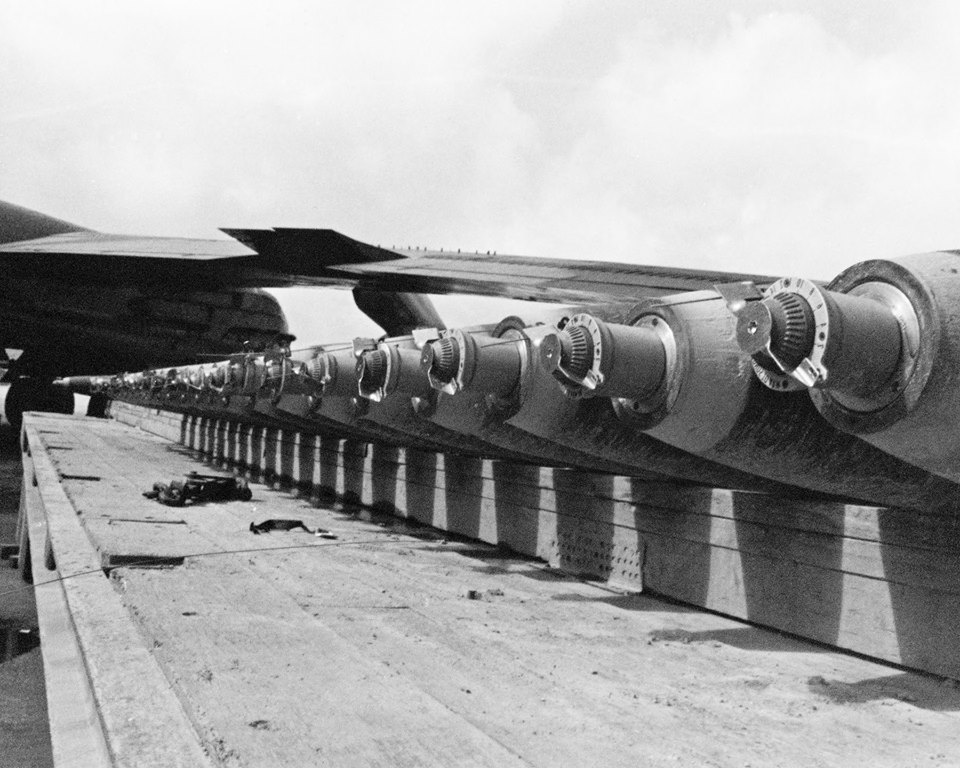
From Dec. 18 to Dec. 29, 1972, Andersen Air Force Base launched 729 sorties against 34 targets in North Vietnam as part of Operation Linebacker II. At the height of the Vietnam War, Andersen was home to more than 15,000 Airmen, 153 B-52 bombers, and 20 support aircraft.
The bombing campaign was considered a success because it led to the release of 591 American prisoners of war and brought the North Vietnamese back to the negotiating table, where the Paris Peace Accords were signed less than a month later. The idea of “peace through strength” was on full display during Operation Linebacker II.
Even so, 75 Airmen lost their lives in support of the operation, including 33 who died in the 15 B-52 Stratofortress bombers shot down during the campaign—the primary bomber used in Operation Linebacker II.
How were the North Vietnamese able to shoot down 15 B-52 bombers, something no one else has ever done?
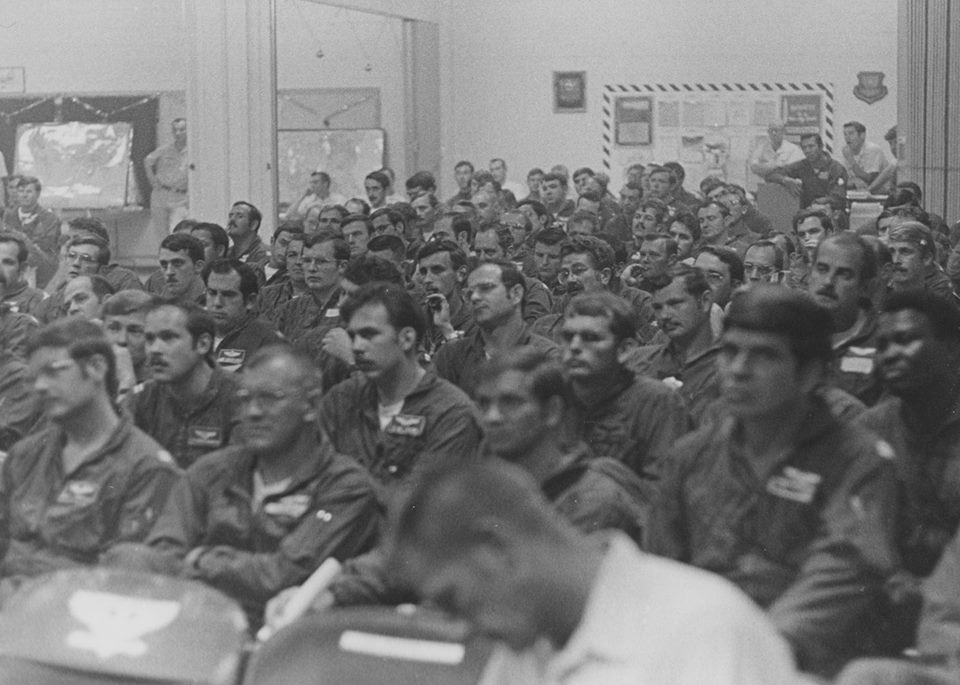
John Chesire, a former U.S. Navy pilot who flew 197 combat missions during the Vietnam War, explains on Quora.
- In 1972, North Vietnam fielded a highly effective, layered air defense network. The intense firepower directed at the B-52s was unmatched since World War II and has not been seen on that scale since. The Surface-to-Air Missiles (SAMs) and radar systems in use were advanced for the era. Numerous SAM sites were deployed across the area, with the greatest concentration positioned near the B-52s’ intended targets. Especially important was that these SAM sites were operated by numerous highly trained Soviet specialists assisting the North Vietnamese. During the Cold War, the Soviets were eager to test their frontline air-defense systems in a real combat environment, so they invested heavily in the effort. They also quickly adapted their tactics to improve their ability to shoot down B-52s during those 11 days in December.
Chesire continues;
“While the Soviet SAMs, AAA, and Russian advisors had a lot to do with shooting down 15 B-52s and damaging several more, there were some guilty ones on the US side of the war that also helped to cause B-52s to get shot down.”
- Unfortunately, the massive B-52 strikes were planned and directed by generals stationed far from the fighting at Offutt Air Force Base in Nebraska, using outdated plans and tactics carried over from the era of potential global war and ill-suited to a smaller conventional campaign. Ideally, the raids should have been planned at a more operational level, where the B-52 crews were based in Guam and Thailand. Even worse, whenever experienced operational commanders proposed different tactics, their recommendations were overruled by commanders safely at home.
- Incredibly, especially during the early days of the campaign, the B-52s were highly predictable. Notices to Airmen were issued widely before each raid. Even more troubling, the bombers usually approached in a straight line, in a trail, and on the same heading each time. Chesire watched them one night and could not believe it.
- The critical weakness occurred at the turning point after the bomb’s release. That maneuver became predictable as well and left the bombers most exposed, much to the satisfaction of the Soviet technicians. This turn likely reflected tactics from the nuclear era, when a sharp turn followed bomb release to escape the blast. However, while turning, the aircraft’s normally effective electronic countermeasures were significantly reduced. When the three-plane cells, which normally provided strong mutual ECM coverage while flying straight, entered a tight turn, they lost their radar masking. They became visible to SAM operators without directed jamming. As a result, they were easy targets for surface-to-air missiles. This vulnerability at the turn point had not been identified beforehand, because the Air Force had never thoroughly tested it in its evaluation exercises.

Chesire concludes,
“Thankfully, after a few tragic nights with many B-52 losses and men, there was a near mutiny at the officers’ club in Guam of the B-52 crews. The crews demanded that the strike tactics be modified to give them a better chance of survival. Similar pressure was made at the B-52 bases in Thailand. Their voices were finally heard and heeded. The experienced operational commanders then took over the planning and tactics, making many changes that made a significant impact on their survival rate the following days.”
Top Image: Jack Fellows illustration; Photo by U.S. Air Force


