

When Engine Fires Grounded a Fleet—and Why 9,000 Hours Still Took to the Sky
After an undisclosed number of engine fires, the US Army grounded the entirety of its CH-47 Chinook helicopter fleet “out of an abundance of caution” on Aug. 30, 2022. No deaths or injuries occurred due to the fires.
US Army spokesperson Cynthia Smith attributed the issue to fuel leaks, stating that the service had “identified the root cause” and was “implementing corrective measures to resolve this issue.” The leaks were caused by faulty aftermarket O-rings not produced by engine manufacturer Honeywell International. “In full coordination with the U.S. Army, Honeywell helped discover that O-rings not meeting Honeywell design specifications had been installed in some T55 engines during routine and scheduled maintenance at an Army Depot,” the company said in a statement to Army Times. Service officials identified at least 70 aircraft with the faulty part out of the Army’s approximately 400 Chinooks. An incident where a hovering Chinook had to land and use its fire suppression system to address “a small active fire near the aft portion of the No. 2 engine” had been highlighted in a July aviation safety bulletin published by the service’s Combat Readiness Center.
The CH-47 Chinook is the US Army’s only heavy-lift cargo helicopter, supporting a full spectrum of operations including disaster relief, homeland defense and security, and overseas contingency operations. The first fully equipped US Army Chinook, the CH-47A, entered service in August 1962. The current CH-47F features a fully integrated digital cockpit management system and advanced cargo-handling capabilities, while the Special Operations Command MH-47G adds doubled fuel capacity and an in-flight refueling system. Chinooks are currently in service or under contract with 20 international defense forces, including eight NATO member nations.
Among its international operators, the Royal Netherlands Air Force’s 302nd Squadron marked a notable milestone on Jun. 2, 2021, when two aviators accumulated a combined 9,000 flight hours on the CH-47 during the same flight out of Fort Hood—Dutch aviator Maj. Jaap Lokker reached 5,000 accident-free flight hours, while retired Chief Warrant Officer 3 Chris Ryan, a contractor with the squadron, hit his 4,000-hour mark. “To put that in perspective, 4,000 hours is about half a year of straight flying,” said Tim Pool, the Team Oranje site lead for the squadron.
Lokker, who joined the RNLAF as an aviator in 1980 and previously logged nearly 4,000 hours on the Alouette light utility helicopter, became the first Dutch aviator trained on the CH-47 at Fort Rucker, Alabama. Ryan, a 20-year Army veteran who retired in 2018, had not expected to fly Chinooks again until joining the squadron as a contractor, serving as an instructor pilot, standardization pilot, and instrument examiner. “When I retired, I never thought I would fly Chinooks again, but it feels great,” he said.
The RNLAF received its first CH-47F in April 2020 and operates a fleet of 20, equipped with the same digital automatic flight controls, Common Avionics Architecture System (CAAS) glass cockpit, and advanced cargo-handling capabilities as the US Army—a common configuration designed to lower overall life-cycle costs.
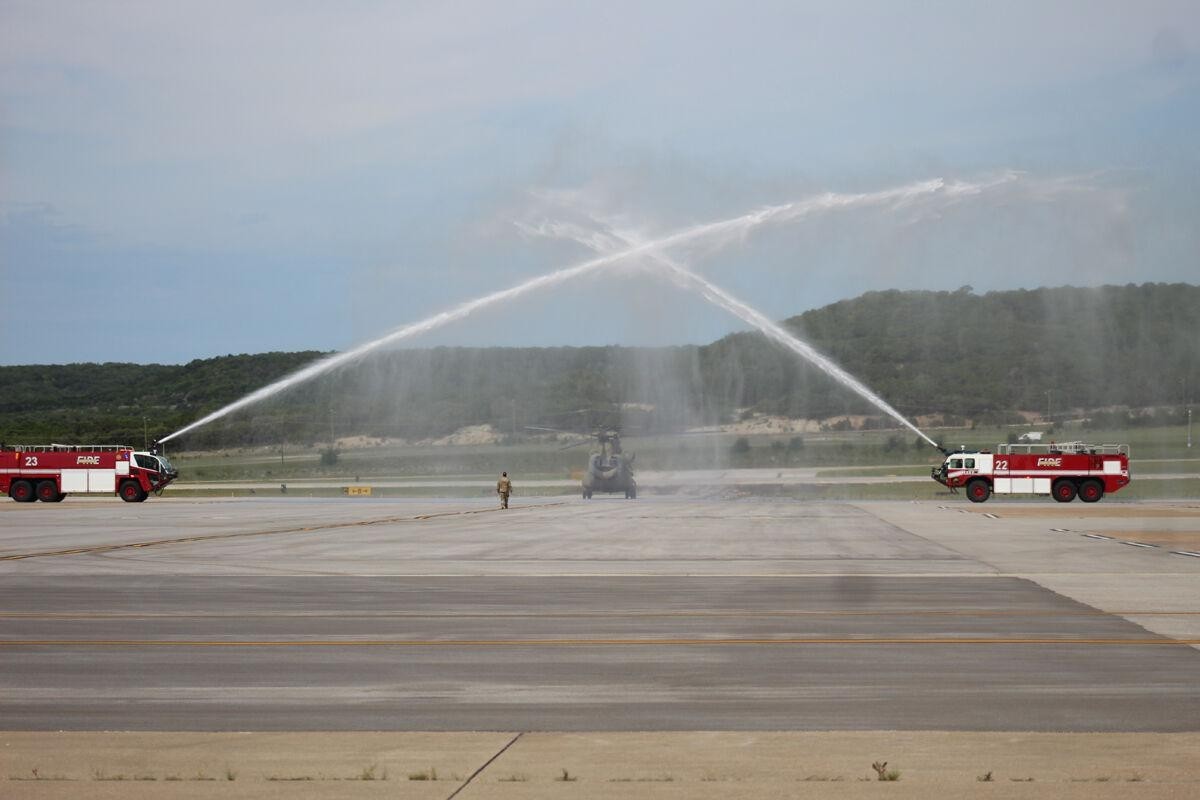
Photos: Acroterion via Wikipedia; Brandy Cruz, Fort Hood Public Affairs / U.S. Army


