

The Black Hawk Multirole Helicopter
The Black Hawk was the military’s most versatile helicopter, suited for a variety of missions, including command and control, air assaults, medical evacuations, and lift operations. Capable of carrying four crew members (two pilots and two crew chiefs) plus a fully equipped 11-person infantry squad, the Black Hawk could also hold a 105 mm howitzer or a Humvee suspended below the aircraft during sling-load operations.
The Black Hawk served with the US military and the armed forces of 28 other countries worldwide as a tough, reliable utility helicopter. More than 4,000 Black Hawks of all types were in service worldwide. The US Army was the largest operator, with 2,135 H-60 designated aircraft. The same aircraft, sold internationally directly from Sikorsky, acquired the S-70 designation.
Why Marines Didn’t Fly the Black Hawk
One of the few military branches that did not use the iconic Black Hawk was the US Marine Corps. The reasons were deeply rooted in the Marines’ unique operational requirements.
“Marines don’t fly Black Hawks for a couple of reasons,” Jonathan Burba, a former infantry rifleman at the US Marine Corps, explained on Quora. “First, Marine Corps aircraft have to be able to operate off of a ship. The MV-22 Osprey and the CH-53E Super Stallion [and in the future the CH-53K King Stallion] are both huge but are capable of adjusting to fit on a flight deck. Both aircraft are large, but they actually fold for easy storage.”
The cargo capacity difference was significant. The Black Hawk could carry 11 loaded troops, while the Osprey carried twice that number. The Super Stallion could carry 50 or 60, depending on how the interior was arranged. As far as weight went, the Blackhawk could carry up to 9,000 lbs, while the Osprey and Super Stallion carried 15,000 lbs and 36,000 lbs, respectively.
“Since we operate from the sea, it’s helpful to be able to sling vehicles such as Hummers, JLTVs, and LAVs onto shore by helicopter,” Burba noted. “Since we’re operating off of a very small airport, all of the birds have to be able to handle a lot of different jobs.”
The Mission Requirements
Jeff Kyle, a former USMC CH-53A and UH-1N pilot, provided additional context. After serving 4 years in the Marine Corps and then retiring from the Air Force in 2007 after 21 years, his entire career was spent maintaining and flying helicopters. He worked on Marine CH-53As and became a Crew Chief, earning his wings of gold. In the Air Force, he worked on HH-53Cs, HH-3Es, UH-1Ns, and HH-60Gs, achieving 500 flight hours in the CH-53A and the UH-1N.
“The question of why we didn’t use H-60s in the Marine Corps was fairly simple,” Kyle explained. “It couldn’t do the jobs we needed to get done. The Huey was designed to fly a specific number of troops from point A to point B. The Huey D model derivative was the most successful at performing the mission—to take a squad into combat, drop them off, then sustain them for the duration of the mission. They literally hauled beans, bullets, and, unfortunately, body bags.”
The H-60, Kyle noted, was essentially an “electric Huey”—a much better, stronger, faster squad helicopter than its predecessor that did all the same missions for the Army. However, hauling one squad was insufficient for Marine operations.
“Packing the numbers of Hueys or H-60s onto an assault carrier to do the same number of missions that CH-46s/MV-22s [did] wouldn’t be logistically feasible,” Kyle said. “One 46/22 carries 20 Marines and all their toys into battle. The same number of Hueys needed to do the same job would entail using 3 Hueys. Deck space is at a premium on the helicopter assault carriers.”
The Marine H-1s continued doing the same job they had been doing since Vietnam, including the UH and AH versions—small critical missions that had to be done and nothing else could do them as efficiently.
VH-60 White Hawks
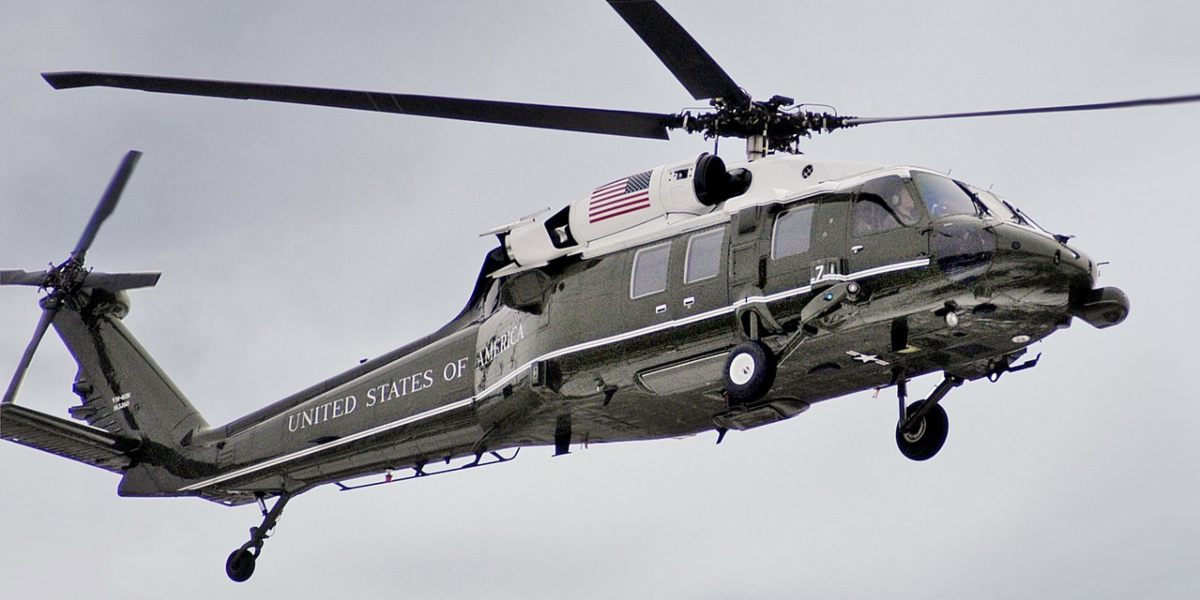
The closest the Marine Corps had to the Black Hawk was the helicopters used by HMX-1 to fly the president. The Marine One birds were from the Black Hawk family, but all the VH-60 White Hawks were being retired and replaced with a new helicopter based on the Sikorsky S-92.
Why the Marines Kept the Cobra Instead of Adopting the Apache
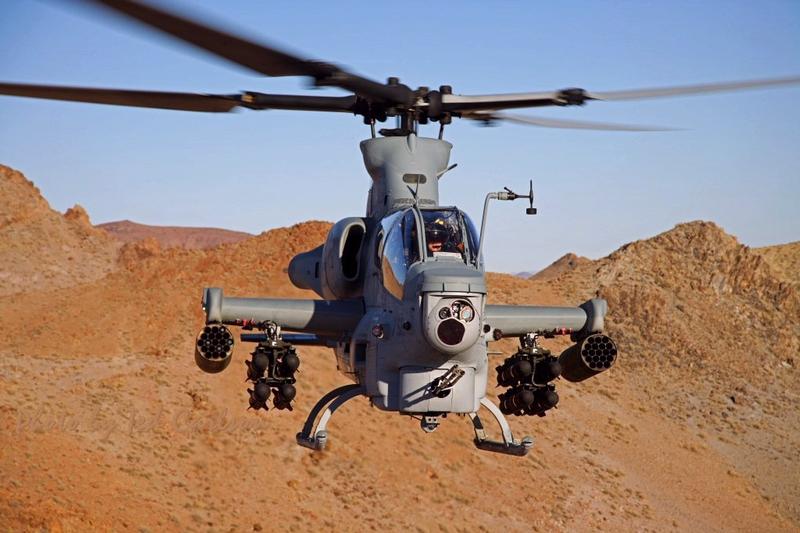
A member of the prolific Huey family, conceived, developed, and built by Bell Helicopter, the AH-1 Cobra (also referred to as the Huey Cobra or Snake) was a two-blade rotor, single-engine attack helicopter.
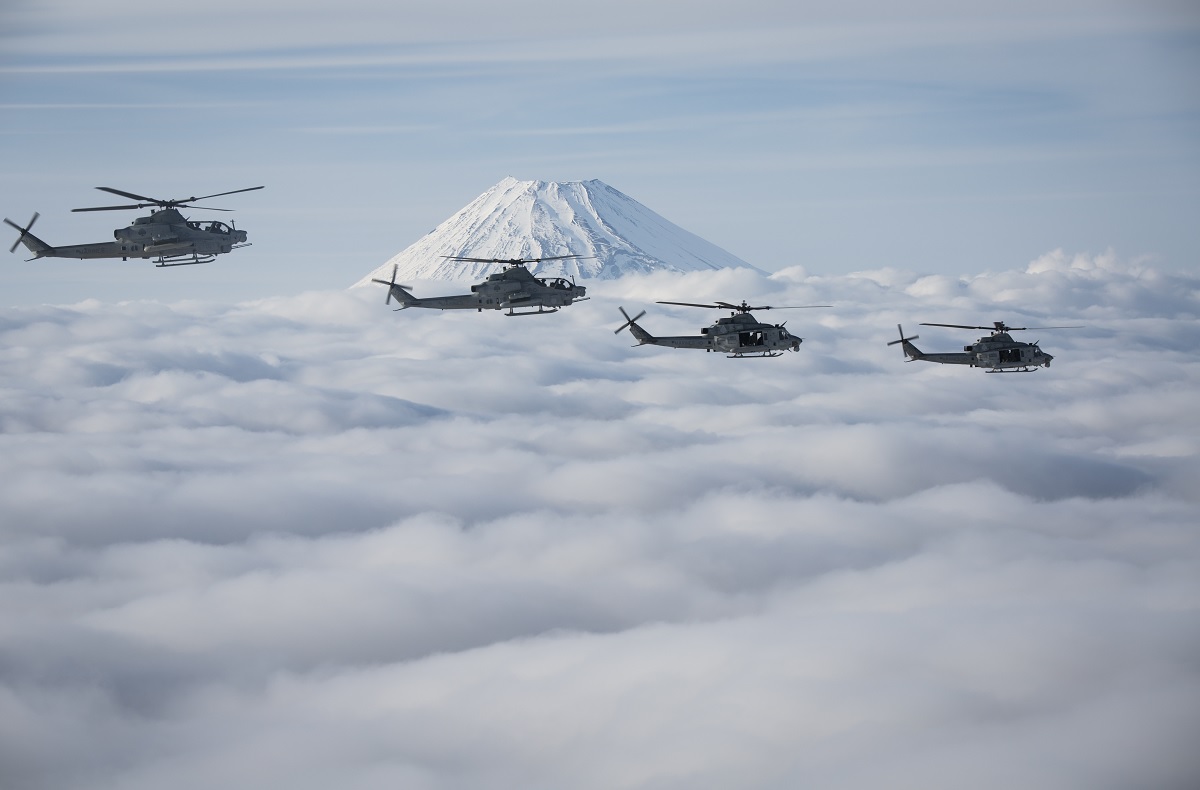
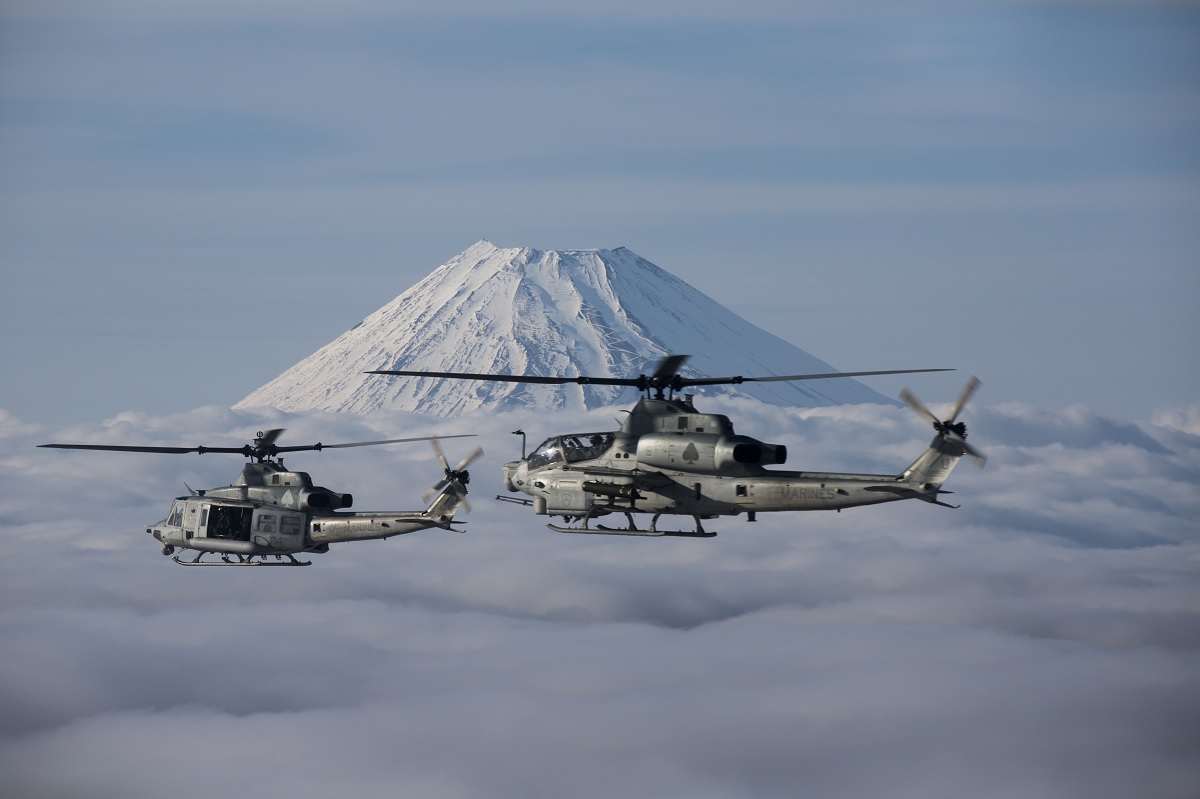
Even though upgraded versions of the AH-1 continued to fly with the militaries of several nations, within the US Army, the Cobra was replaced by the AH-64 Apache. However, a twin-engine version of the AH-1 (the AH-1Z Viper) still flew with the US Marine Corps as the service’s primary attack helicopter.
Damien Leimbach, a former avionics technician at the US Air Force, explained on Quora that the answer traced back to the original design philosophy.
“The original Cobra was a derivative of the Huey airframe. They used the same engine, transmission, flight controls, rotor blades, tail boom, etc. In fact, when first built, it was called the ‘HueyCobra,'” Leimbach said. “It made sense for the Army and Marines in the 1960s to adopt a system that used so many common parts as the Huey they already had in service, as it streamlined supply and training.”
Different Missions, Different Needs
The Army and Marines had different missions. The army’s job was to confront other armies, which would probably have tanks. During the Cold War, it was expected that the US Army would have a confrontation with Warsaw Pact forces in Europe, as a million screaming Soviets would pour through the Fulda Gap with their tanks leading the way.
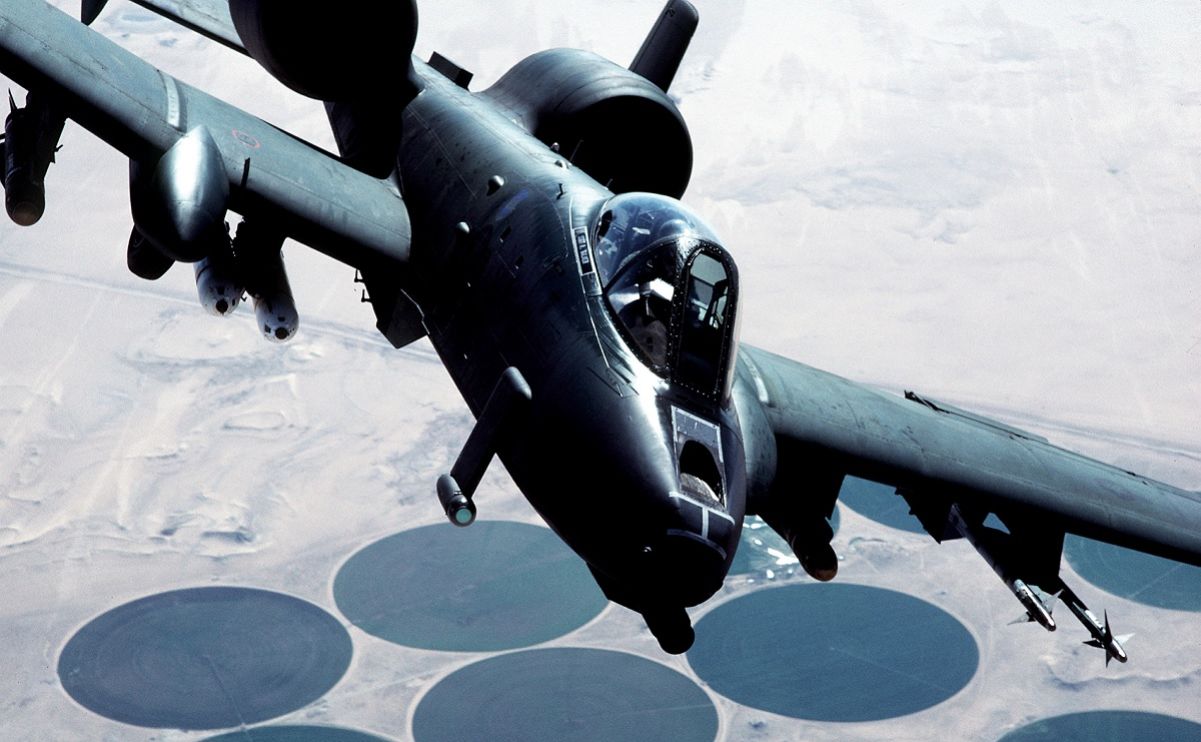
The Army wanted something with more anti-armor punch than what the Cobra could deliver in the 1970s, so it paid for the development of the AH-64 Apache to replace it. Moving infantry around in Europe required hauling more than the Huey could provide as well, so the Army paid for the development of the Blackhawk to replace it. This dedicated anti-armor mission also led to the development of one of the world’s most iconic airplanes, the A-10, specifically designed to confront tanks in Europe.
“But wait, isn’t this about the Marines?” Leimbach asked rhetorically. “What you will look for very hard but not find a lot of are Marine bases in Germany or Marine divisions stationed there. That’s because blunting an armored assault across the plains is not their job. Their job is to assault beaches and to fight from ships to support those beach landings.”
The Economics of Naval Aviation
The Apache could carry a little more and go a little faster than the Cobra, but it was twice the weight of a Cobra and also twice the price. It took up more space on deck and consumed more fuel and was also more maintenance-intensive. It was a similar story with the Huey and the Blackhawk—a little bigger, a little faster, but much more expensive.
More importantly, the Apache was a Hughes (now Boeing) product, and the Blackhawk was from Sikorsky. This meant zero parts commonality with each other or either of the two Bell helicopters the Marines already had.
“So, the Marines decided they didn’t need the new toys and kept upgrading and improving what they had in order to keep the very efficient system of common training, tools, and interchangeable parts going,” Leimbach concluded. “The new models are fantastically lethal, less expensive, and they both save space and share parts, dramatically simplifying maintenance and logistics.”
Photo credits: U.S. Army, U.S. Navy, U.S. Marine Corps, and Patrick Albright/Army; Lance Cpl. Preston L. Morris/Marine Corps via Army Times

