

From the U.S. Navy perspective, short of actually having a Fulcrum or Flanker, the F-16N was as close to a real dissimilar fighter as they could get.
The F-16 has the distinction of being the only 4th generation adversary that has served with the U.S. Navy and the U.S. Air Force (USAF). The USAF flew the conventional F-16C model extensively, which served as the basis for the F-16N. Equipped with an ACMI pod on the starboard wingtip, the F-16N was designed for air combat maneuvering. About the A-4 Skyhawk and F-5 Tiger in particular, the Navy has been searching for a successor for its aging fleet of aircraft.
In their book Adversary: America’s Aggressor Fighter Squadrons, Chuck Lloyd and Rick Llinares explain this. The F-16N, a basic F-16C (Block 30 with the General Electric F110-GE-100 engine) that kept the F-16A/B models and the APG-66 radar, was chosen by the Navy after an examination of the available aircraft. The ALR-69 Radar Warning Receiver (RWR), the ALE-40 chaff/flare dispenser, and the ACMI pod were all integrated into the F-16N to fully simulate adversaries.
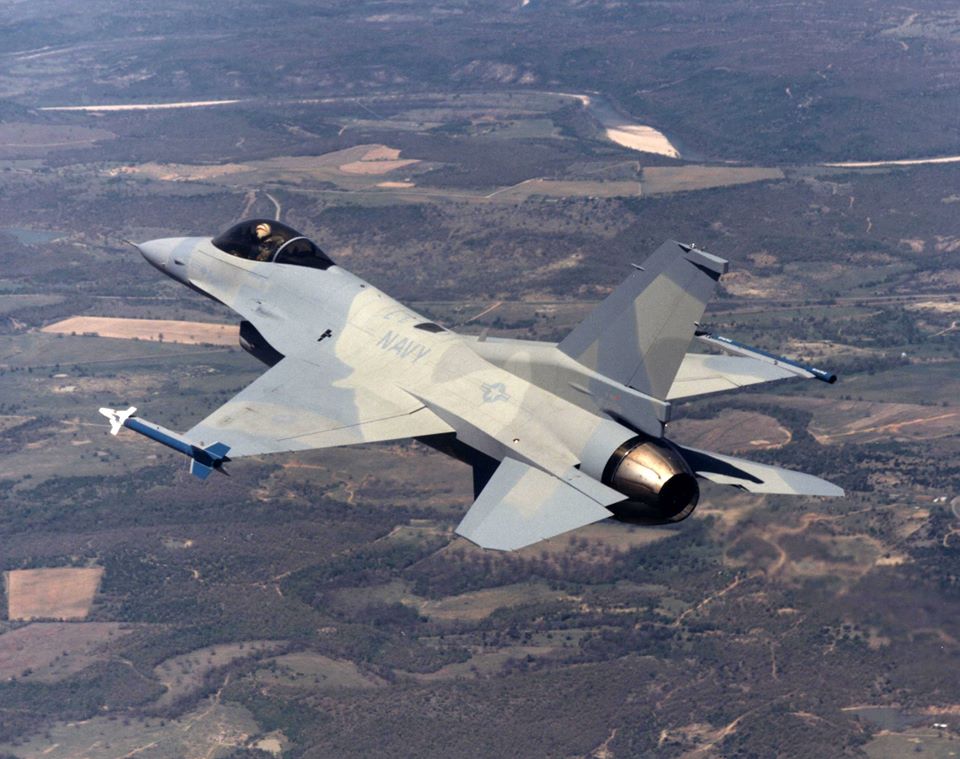
Twenty-two single-seat F-16Ns and four two-seat TF-16Ns were ordered by the Navy and deployed in the late 1980s. The Bandits of VF-126, who had their base at “Fightertown USA,” also known as NAS Miramar, were the first operators to fly the aircraft. Following them were the Blackbirds of VF-45 at NAS Key West, who were equipped with F-16 opponent fighters. The final Navy aggressor units to acquire the jet were the Fighter Weapons School and the Challengers of VF-43.
From the Navy perspective, short of actually having a Fulcrum or Flanker, the F-16N was as close to a really dissimilar fighter as they could get. Therein lies perhaps its greatest advantage. Navy Tomcat and Hornet crews were now fighting a truly different aircraft, flown by superb aerial tacticians. Against the F-14, the smaller, more maneuverable F-16N was a very challenging foe, as the following video shows.
Unfortunately, the F-16Ns began to experience the wear and tear that comes with excessive g’s throughout many aerial engagements. The Navy made the decision to retire the Falcon after deciding that maintaining it would require expensive repairs. Unexpectedly, the F-5Es that the F-16N was meant to replace ended up outlasting their intended successor. Regardless, the F-16N will stand as the best enemy tactics fighter the US Navy has ever flown.
In 2002, the Navy began to receive 14 F-16A and B models from the Aerospace Maintenance and Regeneration Group (AMARG) that were originally intended for Pakistan before being embargoed. Like their F-16N predecessors, these aircraft are painted in exotic schemes and are used for adversary training by the Naval Strike and Air Warfare Center (NSAWC) / TOPGUN.
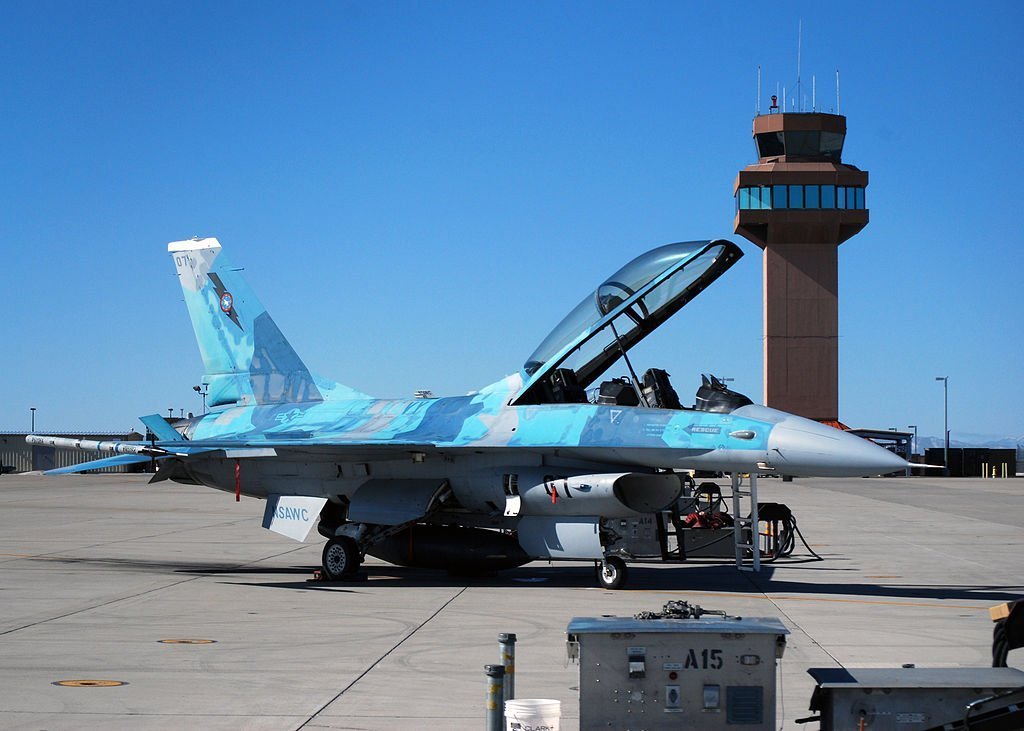
Photo by LTC David Baranek and Mass Communication Specialist 1st Class Joseph R. Vincent / U.S. Navy

