

A competition grew between the 51st Fighter Wing and the 4th Fighter Wing, the two American Sabre units. The constant emphasis on the victory count, in fact, would lead to what came to be known as “MiG Madness,” as individual pilots and their leaders concentrated on scores.
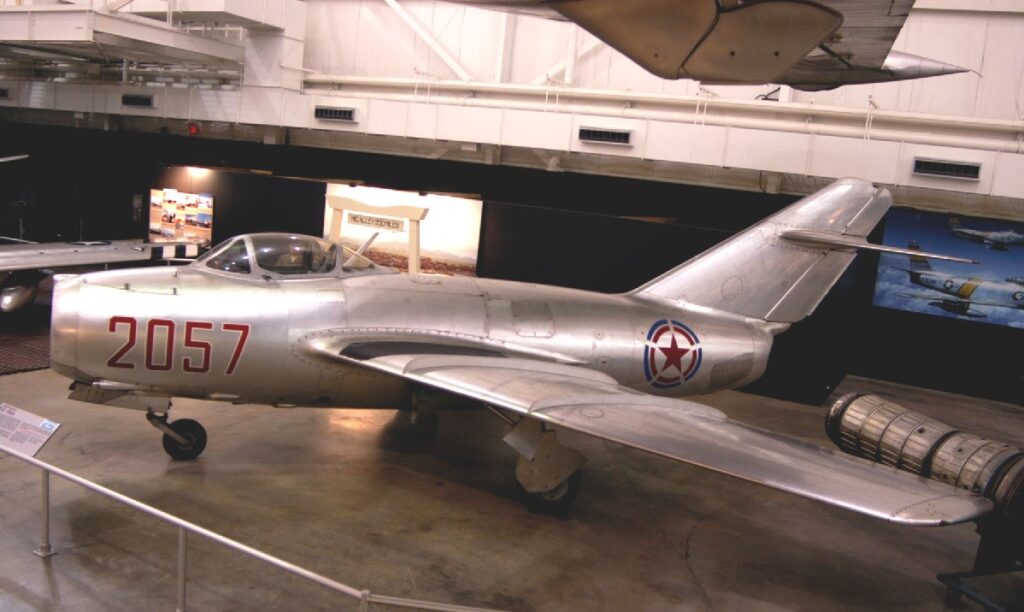
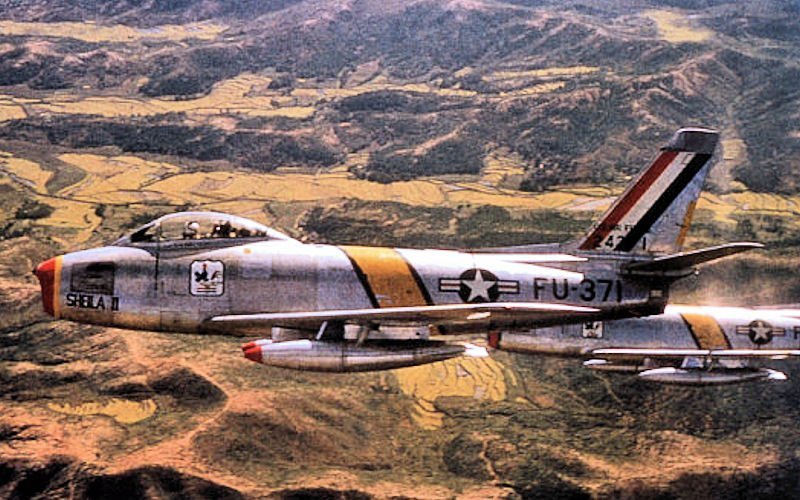
Between December 1950 and July 1953, the skies over the northwest corner of North Korea, between the Chongchon and Yalu rivers, became the scene of an air war with few precedents. The fighting was conducted almost entirely by two opposing forces: U.S. Air Force pilots flying the North American F-86 Sabre, America’s premier day fighter, and Soviet pilots operating the formidable Mikoyan-Gurevich MiG-15 interceptor.
In MiG Alley, Thomas McKelvey Cleaver describes how rivalry intensified between the 51st and 4th Fighter Wings, the two American Sabre formations. Their persistent focus on victory totals eventually produced what became known as “MiG Madness,” as pilots and commanders became increasingly preoccupied with their scores. In January 1952, the 51st claimed 27 victories, compared with just five for the 4th. Much of that disparity stemmed from the 51st’s newer F-86Es, which featured improved flight controls and an advanced radar-ranging fire-control system, while the 4th continued to operate its increasingly worn F-86As. Maintenance and spare-parts shortages continued to affect both units, and with fewer missions flown in February, the 4th was credited with seven MiGs and the 51st with ten.
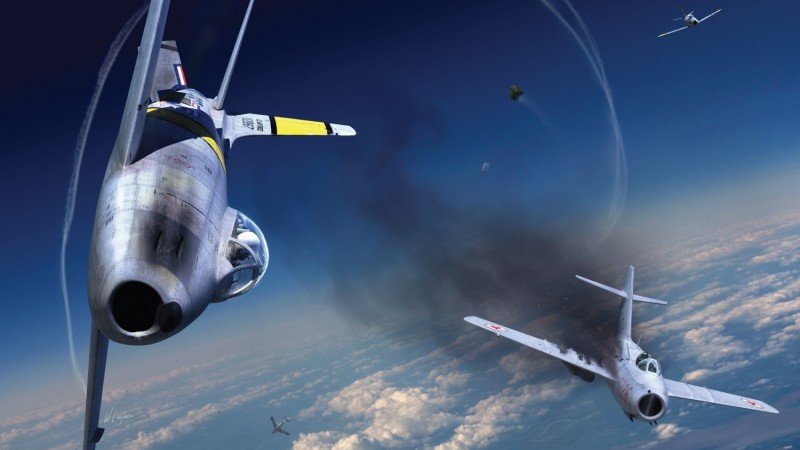
These achievements were overshadowed by the death of Major George A. Davis Jr., then the war’s leading Sabre ace, on February 10, 1952. First Lieutenant Alfred W. Dymock, who had flown as Davis’s element lead on several missions, later reflected on his friend’s mindset. “George’s main goal in life was to shoot down MiGs. He was dwelling on his score a lot, about how he hadn’t scored since December.”
Others remembered Davis as more willing to take risks than his squadron colleagues—an especially notable trait for a World War II ace and one of the older pilots in the unit. “Bones” Marshall called him “the best deflection shooter in the air force.” Dymock and First Lieutenant Charlie Mitson, who had flown with Davis both before the war and while serving in the 4th Fighter Wing, recalled that after Davis’s four-victory mission on December 13, he became increasingly dismissive of the enemy. He reportedly claimed that the MiG pilots were nowhere near as capable as the Japanese aviators he had faced over New Guinea.
“He’d come to believe no MiG pilot could shoot him down,” Mitson recalled. “It wasn’t a good attitude, because there were some good pilots on the other side.” Some members of the squadron compared Davis to the impulsive World War I ace Frank Luke, while others quietly wagered on when Davis would “get himself killed.”
On February 10, 1952, Davis led 18 F-86s from the 334th Squadron in a protective screen for a Thunderjet strike on Kuni-ri by aircraft from the 49th Fighter-Bomber Group. When no enemy aircraft appeared, he broke away from the formation and took his flight north toward the Yalu in search of combat. The decision was extraordinary, since Davis was the mission commander responsible for protecting the strike force. It was even more unusual given the tactics of the period: American F-86s did not normally enter MiG Alley in formations smaller than three flights, because the large MiG formations could overwhelm them through sheer numerical superiority. Shortly before entering the area, Davis’s element leader reported an oxygen-system failure and aborted with his wingman. Davis was therefore left with only his own wingman, First Lieutenant William W. Littlefield, as they proceeded into one of the areas most likely to contain MiGs.
Littlefield later recalled that, soon after the formation had been reduced to two aircraft, they spotted five MiGs circling north of the Yalu. Davis maneuvered around them and then saw ten MiG-15s ahead and below at an altitude of 32,000 feet. The weather that day prevented the high-flying MiGs from producing contrails, meaning additional enemy aircraft could have been nearby without being detected. Despite facing odds of roughly ten to one, Davis attacked, diving into the formation while opening fire. The MiGs immediately scattered, but one hesitated long enough for Davis to catch it and claim his 13th victory.
Davis had enough speed to continue his dive and escape, but instead he turned sharply after another MiG, sacrificing energy and airspeed in the process. He maneuvered behind what would become his 14th and final victory and fired while in a steep bank, striking the aircraft near its wing root and engine. The MiG caught fire and went down, but Davis continued turning, losing still more speed and energy as he pursued a third target. During the maneuver, an unseen MiG slipped in behind him and opened fire. Littlefield watched cannon shells tear into the Sabre just below the cockpit canopy, hits that almost certainly killed Davis. The aircraft spun out of control and plunged from 32,000 feet into the mountains below, while Littlefield followed it down and called for assistance.
When Littlefield returned to Kimpo, the group leader subjected him to a harsh interrogation, suggesting that Davis had been lost because Littlefield had failed to provide adequate cover. “They were looking for a scapegoat since George was a national hero,” Dymock later observed. Others in the unit recalled that Littlefield was devastated by the incident and deeply troubled by the possibility that he had failed his leader. “It took him months to recover,” Mitson said.
Fifth Air Force took two days to acknowledge Davis’s loss. Of the three MiGs claimed by American pilots on the morning of his death, two were officially credited to Davis, despite the absence of evidence confirming that they were the aircraft Littlefield had seen him shoot down. Moreover, two of the claims—both listed as “damaged”—had been filed by Major Donald D. Rodewald and his wingman, First Lieutenant James R. Ross, of the 51st Wing’s 25th Squadron. The 25th Fighter-Interceptor Squadron’s history records that Rodewald claimed a “probable” at 0800 hours and Ross a “damaged” at 0810—28 and 18 minutes, respectively, before Davis began his attack at 0828. Davis had broken away from his squadron at 0803.
George Davis, the only American ace killed in combat during the Korean War, was posthumously promoted to lieutenant colonel and awarded the Medal of Honor. The citation states, in part:
Major Davis’ bold attack completely disrupted the enemy formation, permitting the friendly fighter-bombers to successfully complete their interdiction mission. Major Davis, by his indomitable fighting spirit, heroic aggressiveness, and superb courage in engaging the enemy against formidable odds, exemplified valor at its highest.
This part of the citation is unquestionably accurate, as the Chinese and Soviet MiG formation never penetrated far enough south to disrupt the Thunderjet attack that day.
Fellow ace and 336th Squadron commander Major Dick Creighton summed up Davis by saying, “He had more guts than the law allows.”
After news spread that America’s leading ace had been killed in action, Chinese officials reviewed their records and concluded that 36 MiG-15s from the 4th Fighter Aviation Division had taken part in the engagement. Zhang Jihui, a flight leader with the 12th Fighter Aviation Regiment, reported that he and his wingman became separated from the main formation while the MiGs were moving to intercept Davis’s group. As they attempted to rejoin the others, Zhang said he spotted eight F-86s between Taechon and Chongye at 0740 hours. The pair moved in behind two Sabres and opened fire.
Zhang claimed to have shot down both American aircraft, but other Sabres destroyed his MiG, forcing him to bail out and killing his wingman. With no gun-camera film available, the 4th Fighter Aviation Division dispatched search teams on February 16 and 18. They located the wreckage of an F-86E, along with Davis’s body and personal effects. Investigators also found that the crash site lay only 500 meters from Zhang’s bailout point and that his 12th Regiment was the only Chinese unit operating in the area at the time. Chinese ground troops were subsequently questioned about what they had witnessed during the aerial battle.
Based on this evidence, the People’s Liberation Army Air Force credited Zhang with shooting down Davis. Davis’s dog tag is now displayed at the Memorial of the War to Resist US Aggression and Aid Korea in Dandong, China, where a MiG-15 painted in Zhang’s Korean War markings stands at the museum entrance.
Questions about Zhang’s claim emerged soon after the Chinese announcement, since Littlefield’s account of the engagement did not match Zhang’s version of events. With no gun-camera footage available, Zhang’s victory claim depended largely on his own recollection. The matter became even more complicated after the Cold War, when the opening of Soviet records led to a competing account that Davis had actually been shot down by Senior Lieutenant Mikhail Akimovich Averin of the 148th Guards Fighter Aviation Regiment. According to contemporary testimony from pilots of the Soviet 64th Fighter Aviation Corps, Davis probably shot down both Zhang and his wingman before being surprised and killed by Averin, who had rushed to the Chinese pilots’ aid. Lieutenant General Georgi Lobov, commander of the 64th Fighter Aviation Corps, likewise wrote in his memoirs that Davis had been brought down by a Soviet pilot.
During the war, Zhang became a celebrated figure throughout China. His victory represented one of the few bright spots in the People’s Liberation Army Air Force’s otherwise disappointing performance in Korea and is now regarded in China as an official “fact of state.” For the achievement, he received the title “Combat Hero, 1st Class.”
MiG Alley is published by Osprey Publishing and is available to order here.
Photo by U.S. Air Force

