

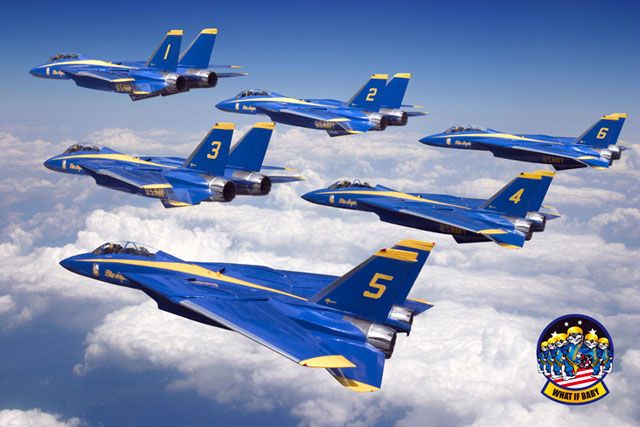
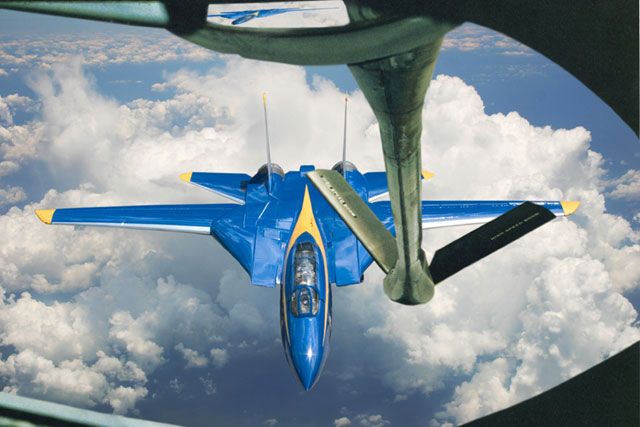
The interesting photos in this post feature some computer-made images and a desk model of the iconic F-14 Tomcat wearing the livery of the two US Military aerobatic teams, the Blue Angels and the Thunderbirds
The photos featured in this post include computer-generated images and a desk model of the iconic F-14 Tomcat painted in the colors of the U.S. Navy’s Blue Angels and the U.S. Air Force Thunderbirds.
The F-14 was even considered a potential replacement for the Blue Angels’ F-4s.
Following several accidents and maintenance issues involving their McDonnell Douglas F-4J Phantoms during the 1973 air-show season, the Blue Angels temporarily suspended operations while Secretary of the Navy John Warner reviewed the program. Warner, who later represented Virginia in the U.S. Senate for six terms, appointed six senior flag officers to assess the team. The panel unanimously recommended that the Blue Angels continue, describing them as a “prime recruiting asset.”
According to Nicholas A. Veronico’s book The Blue Angels: A Fly-By History, Ken Wallace, who served as a slot pilot in 1954–55 and team leader from 1961 to 1963, was asked to help steer the team through a difficult period. At the time, Wallace was working in the Office of the Chief of Naval Operations as a tactical air plans officer. “Because of my past association with the Blue Angels, whenever anything that concerned them came up, I was rung in on it in some way,” he recalled.
According to Wallace, the Secretary of the Navy was initially reluctant to retain the Blue Angels, while the Chief of Naval Operations, Admiral Zumwalt, strongly supported continuing the team. Following discussions with the Secretary, it was agreed that the program could continue, but only with a different aircraft. The F-4 was ruled out because of its accident history, high fuel consumption during the mid-1970s fuel crisis, and demanding maintenance requirements. It was also considered too conspicuous for the period.
As the Blue Angels’ program manager, Wallace faced a demanding assignment. Relying on his previous experience with the team, he introduced a series of sweeping changes. “I started casting about for a different airplane. The airplane that I really wanted was the F-14,’ he said. “I did not want an F-14 with all the weapons control systems in it; that was wasteful.” After proposing his idea to Grumman, they decided that it would cost more to make an airplane without the systems than it would to make one with them. Cost became the determining factor, and the F-14 idea went by the wayside.
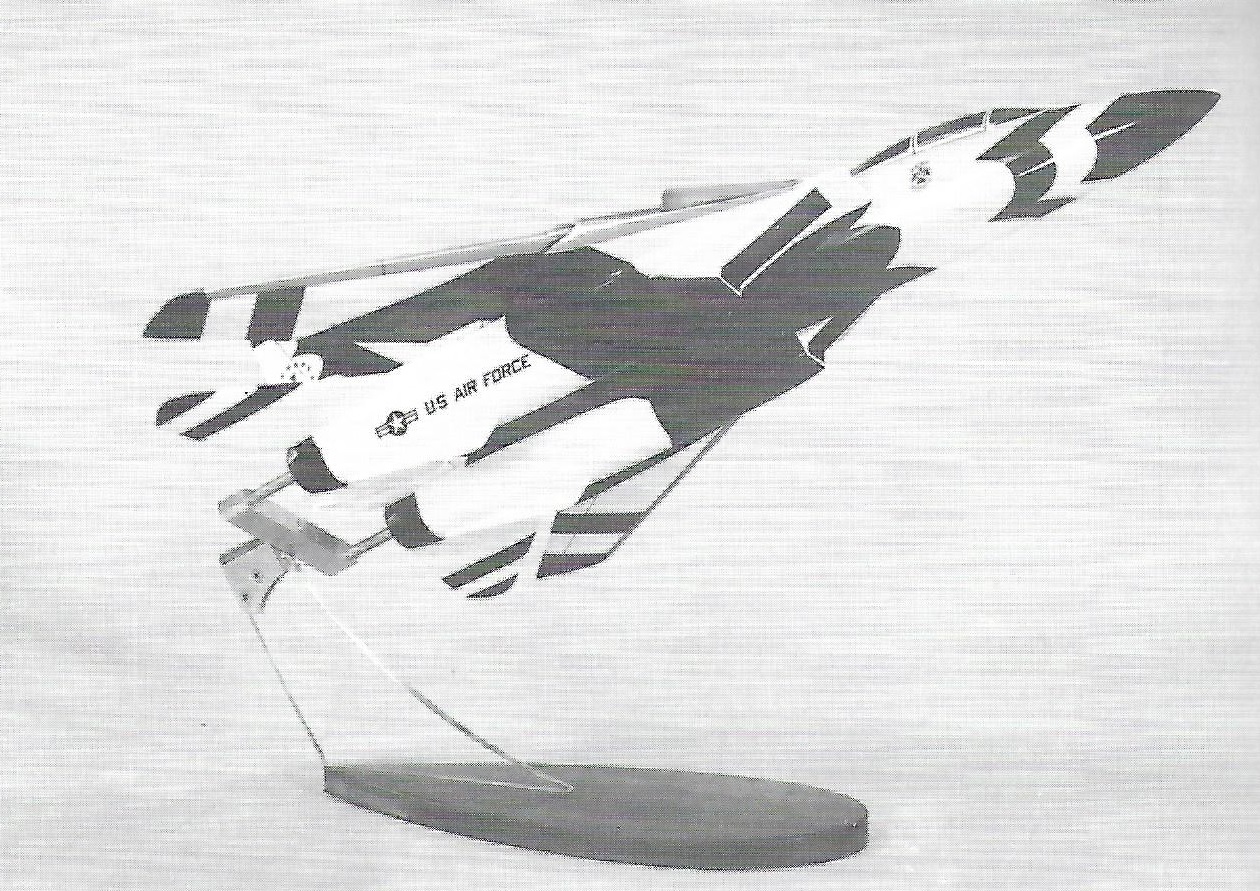
However, no detailed information is available about the F-14 desk model shown in the photograph, which also appears in Doug Richardson’s book Grumman F-14 Tomcat, and features a Thunderbirds livery. What is known is that Grumman produced a mock-up of the so-called “ADCOM F-14,” developed in response to a U.S. Air Force proposal during the 1970s to replace the Convair F-106 Delta Dart as an Aerospace Defense Command interceptor.
To fulfill this requirement, Grumman designed the F-14B Tomcat Interceptor, producing a single mock-up in 1972. The proposed variant featured modified missile launchers and greater internal fuel capacity but attracted little interest and was soon abandoned.
In the end, the USAF opted to purchase standard F-15As instead.
The photograph of the Thunderbirds-liveried Tomcat desk model, together with several images of the ADCOM F-14 mock-up, represents all that remains of the proposed USAF air-defense version of the Tomcat.
Photo by David Tipps via Pinterest and Grumman


