

“The B-52 had crashed shortly after takeoff, killing everyone on board and, because it was fully loaded with hundreds of thousands of pounds of fuel, creating a massive conflagration off the end of the runway,” Jay Lacklen former B-52 pilot
Jay Lacklen is a former B-52 pilot with 12,500 flying hours and the author of two books, Flying the Line: An Air Force Pilot’s Journey and Flying the Line: An Air Force Pilot’s Journey Volume Two: Military Airlift Command. He’s working on the last book of the trilogy.
1969 B-52 crash
“Three years before my arrival, on an Operational Readiness Inspection (ORI) to test the base operational mission capability, Loring had suffered a horrendous disaster. A B-52 had crashed shortly after takeoff, killing everyone on board and, because it was fully loaded with hundreds of thousands of pounds of fuel, creating a massive conflagration off the end of the runway. The fireball reportedly lit up the cockpit of an airborne Loring tanker twenty miles away. In the insular, close-knit base community, this presented a devastating loss. Over the five years, I flew out of Loring, I would see the remnants of the crash site and be reminded of how quickly I could die in this business.”
Clyde Sikorsky, then Sergeant in the Fire Dept. at Loring Air Force Base, recalled:
“On 4 September 1969, during an ORI, Inwitnessed the crash of B-52G 58-0215 at Loring AFB as a Sergeant in the FirenDept working at the Crash Station.
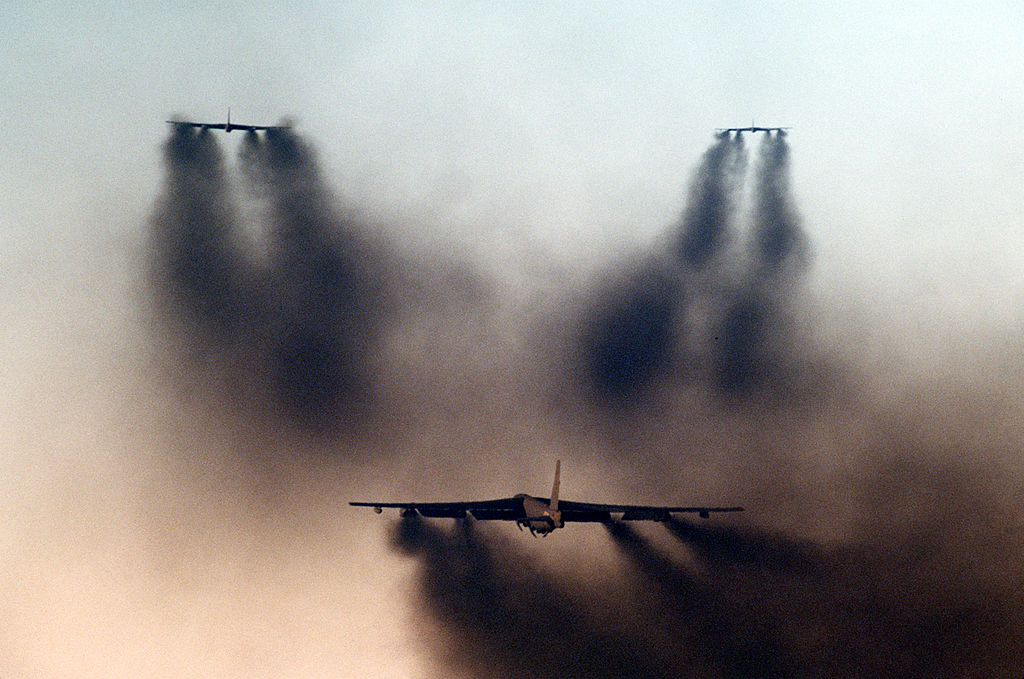
“As MITOs progressed, my partner and I stood by in our P-6 pick up about 50 yards in front of the alert bombers. 58-0215 was having difficulties with one or more inboard engines on the port wing, so we were radioed to continue to stand by on that aircraft until it taxied to the south end of the runway. We were then to hustle down to the north end and standby there as they took off. After several failed attempts to start and run up the engine, they finally got it going, or so it appeared. During this time I could see the Aircraft Commander and, I assume, the Wing Commander talking and gesturing to each other. Finally, I saw the Wing Commander wave them on…to proceed to the south end of the runway and go.
“At the north end, we observed the aircraft approach on its take-off run. As the plane neared us, it lifted off much farther down the runway than normal. As it passed us, the plane struggled to gain altitude. I believe it never gained more than a few hundred feet of altitude. I did not hear any unusual engine noises, just the usual roar. Finally, we observed it slowly disappear beyond the tree line, and after a few silent seconds, we heard the inevitable. It was the beginning of a long night.
“I was never privy to any official information concerning the accident, but it appeared several ejections were attempted. I do not know the source of the engine(s) problem, or why they were ordered to go, except that it was an ORI.
One personal thought: I was deeply moved by the loss of those men, and that I was unable to help. That was my job.
Clyde Sikorski
USAF 1966-1974”
Here’s the list of Crew Members involved in the crash:
Pilot/Commander: Maj Nils O A Oxehufwud USAF killed.
Co-pilot: Capt William N Payne USAF killed.
Nav: Capt Theodore A Burbank USAF killed.
EWO: Maj Robert M Murray USAF killed.
Rad/Nav: Lt Col Robert C Smith USAF killed.
AG: M/Sgt Earl J Barnes USAF killed.
Obs: Col Homer C Bell Jr USAF killed.
Although they both ejected, the Nav and R/N’s chutes did not fully open. Approximately two or three miles north of the runway was the crash site. In 1980, the treetops had been completely sheared off, and there was a large clearing with a lot of debris; nonetheless, there were a few mounds where the bulldozers had plowed some large pieces.
The Aviation Safety Network states that a complete loss of electrical power or a malfunctioning water injection system could have been the cause of the accident, leaving the aircraft without sufficient thrust to make it airborne.
Photo by U.S. Air Force


