

The Tomcat
During the Cold War, advances in Soviet long-range patrol and bomber aircraft created a need for a fleet-defense fighter capable of intercepting high-altitude bombers from beyond visual range. Grumman answered that requirement with the iconic F-14 Tomcat. Armed with long-range AIM-54 Phoenix air-to-air missiles, the Tomcat could engage multiple targets at distances exceeding 90 miles.
For medium-range engagements, the aircraft carried AIM-7 Sparrow missiles, while AIM-9 Sidewinders and an M61-A1 20mm cannon provided close-range dogfighting capability.
To combine the high speed required of an interceptor with the ability to carry this heavy weapons load, Grumman equipped the F-14 with a highly effective variable-sweep wing. This design allowed the aircraft to perform across a wide range of airspeeds.
How to move the F-14 wings into oversweep
The Tomcat’s variable-sweep wing could also be moved into an oversweep position, retracting the wings to a 75-degree angle. This setting was intended solely for ground operations, since the wings would interfere with the elevators if positioned that far aft during flight.
Former US Navy F-14 Tomcat pilot Chuck Hunter explained that although the Tomcat was already a large aircraft on the carrier deck, oversweeping its wings made it more compact. He added that the aircraft could be stacked efficiently when they were not required to be ready for flight.
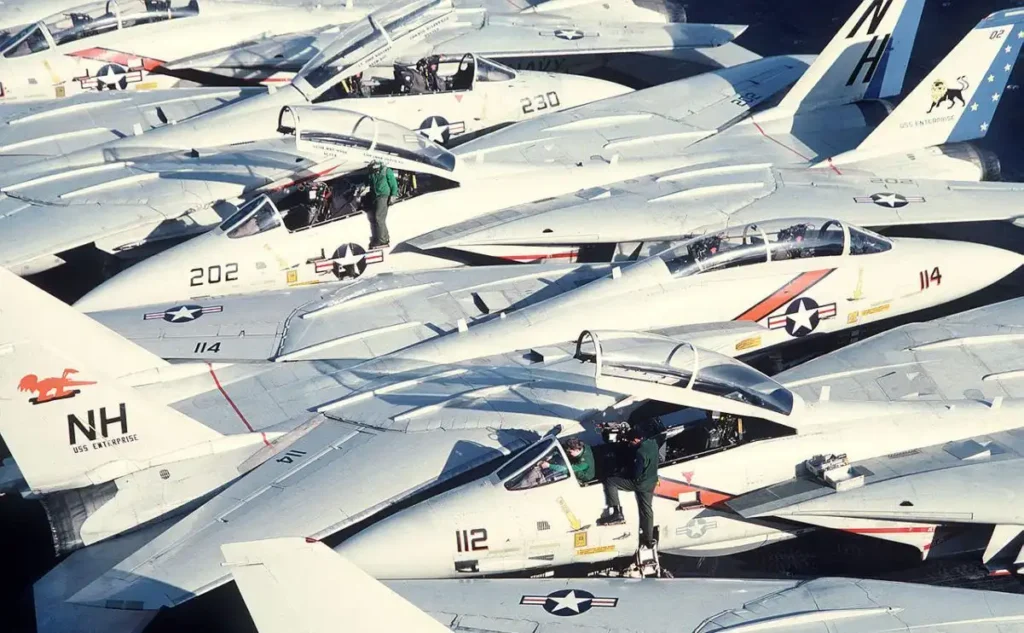
Hunter explained that the Tomcat could not be flown with its wings in the oversweep position, which was intended solely for parking. However, the normal 68-degree sweep angle was sufficient to allow the aircraft to exceed Mach 2.
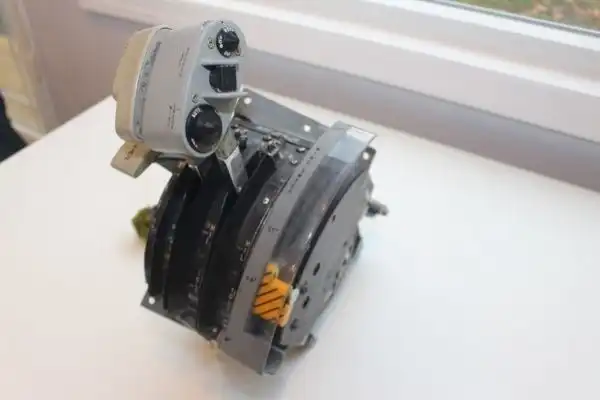
He added that, when the wingsweep lever was raised to select oversweep, a jackscrew moved into position to prevent the elevons from striking the wings, effectively limiting their movement. The wings could not enter the oversweep position until the jackscrews had fully retracted.
Hunter also noted that moving the wings into oversweep was a manual process controlled by the black-and-yellow wingsweep lever rather than an electronic system. The operator had to lift the guard, press the button, and pull the lever back into the oversweep position.
Central Air Data Computer
Hunter explained that the black-and-yellow lever provided direct control of the wings and overrode all electrical wing controls. It could also be used to reposition the wings if the Central Air Data Computer’s control system failed, although he did not know of anyone who had ever needed to use it for that purpose. He added that pilots knew the correct wing positions for different airspeeds, allowing them to move the wings forward for landing if a problem arose.
Hunter concluded by noting that pilots generally placed the wings in oversweep even when parking the aircraft on the airfield, both to save space and because it had become standard practice at NAS Oceana, where he had flown.
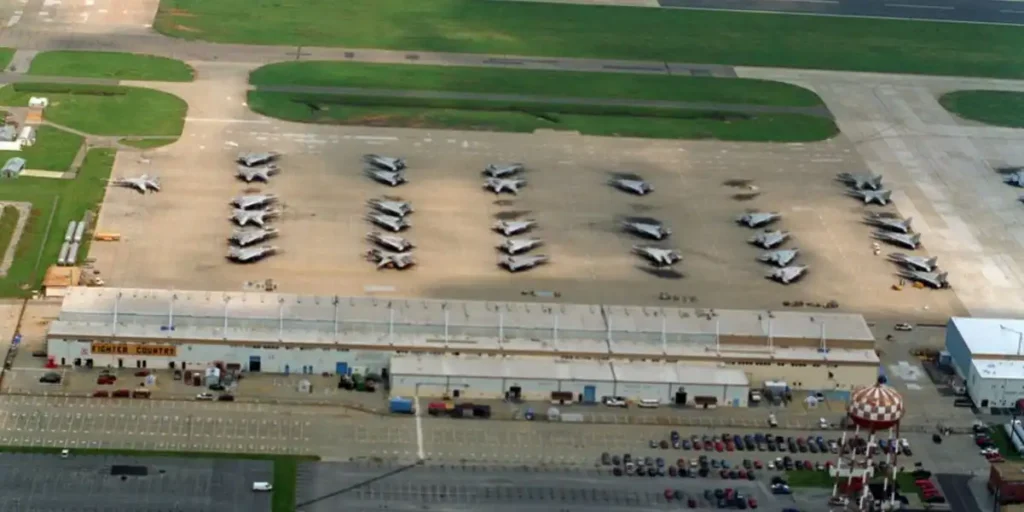
Hunter added that placing the wings in oversweep was not required and that they could instead be left at either 68 or 20 degrees for maintenance purposes.
Photos by Photographer’s Mate Airman Apprentice Nathan Laird and Robert J. Sitar / U.S. Navy and Worthpoint


