

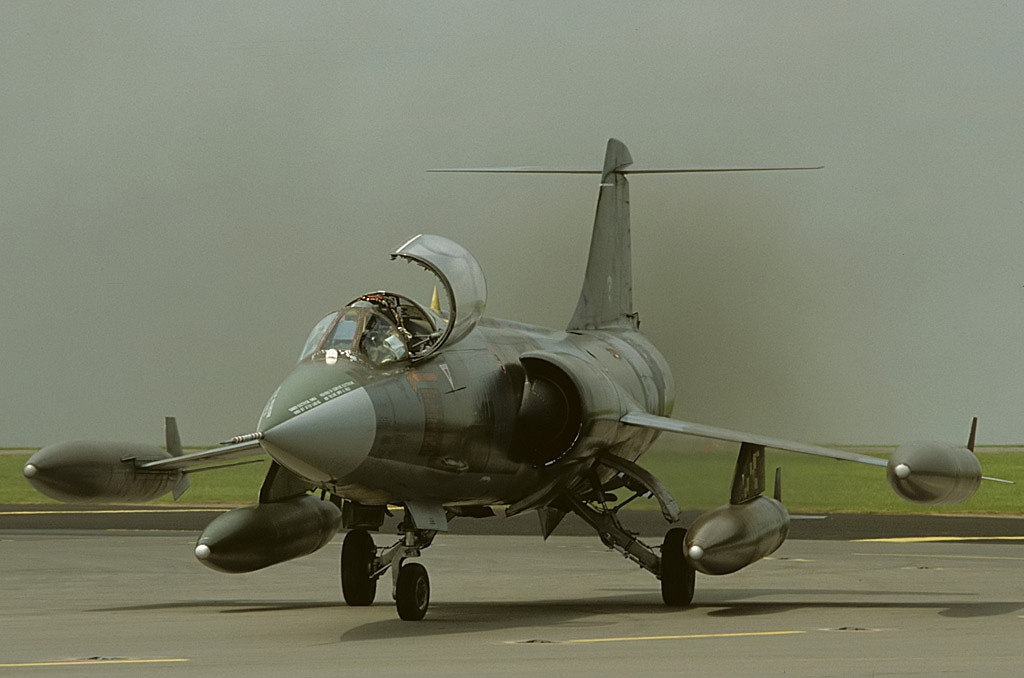
The Italian F-104s scrambled to inspect the USAF armada approaching western Sicily around midnight from Apr. 14 to 15, 1986, and were aggressively approached by the F-14s of the US Navy that asked them to move away—immediately…
Although all 10,000 US military personnel involved in Operation El Dorado Canyon worked to protect the mission’s security, neither the final approach of the two US Navy carrier battle groups nor the massive formation of F-111s and tankers had been detected by the Libyans. However, around midnight on Apr. 14–15, 1986, the entire operation was exposed to Tripoli by one of the United States’ European NATO allies: Italy.
According to Tom Cooper, Albert Grandolini, and Arnaud Delalande in their book Libyan Air Wars Part 3: 1986–1989, relations between the United States and Italy had already deteriorated following the Achille Lauro Affair in October 1985. For at least the next 12 months, the two countries were characterized by deep mutual mistrust. In early 1986, for instance, the Aeronautica Militare Italiana, or AMI, increased patrols by its Breguet Br.1150 Atlantic maritime patrol aircraft over the central Mediterranean. These missions focused not only on monitoring Libyan naval activity but also on tracking operations by the US Navy’s 6th Fleet.
The situation was much the same from the Italian perspective. In retrospect, however, the Americans appear to have been justified in distrusting Italy, particularly Prime Minister Bettino Craxi. The White House, Pentagon, and State Department deliberately chose not to inform Italian authorities about Operations Attain Document I and II. Only before Operation Attain Document II, which developed into the series of clashes on Mar. 24 and 25, 1986, did the White House urge Rome to raise the alert status of its forces stationed in Sicily and “cooperate more closely with the US military.”
The Italians responded by strengthening the defenses of four air bases hosting US aircraft, deploying Spada surface-to-air missile systems and 40mm Breda 40/L70 anti-aircraft guns. Former Lockheed F-104 Starfighter pilots from the IX Gruppo of the 4th Stormo later recalled that, during Operations Attain Document III and Prairie Fire in March 1986, they were scrambled several times and ordered to “fly CAPs in support of American warships,” though they never encountered any. Their impression was that the Italian Joint Chiefs of Staff had little understanding of the confrontation between the Americans and Libyans in the Gulf of Syrte.
At first glance, it may seem reasonable to conclude that Italy played no role in Operation El Dorado Canyon. However, official Italian records remain classified, and what is known comes primarily from accounts given by retired Italian military officers, several politicians, and reports from Italian tribunals investigating corruption linked to arms sales to Libya.
One such account claims that, two days before Operation El Dorado Canyon began, Italian Prime Minister Bettino Craxi warned Libya’s ambassador in Rome, Abdul-Rahman Shalgam, that the country was about to face a US air offensive. Craxi reportedly based his warning on an American request to use Italian airspace for strikes against Libya. He said he had rejected the request, denying US forces involved in the operation access not only to Italian airspace but also to the country’s territorial waters.
Despite apparently knowing that a US attack was imminent, Craxi does not seem to have placed Italy’s armed forces on alert. No records indicate that Italian combat aircraft were repositioned during the period immediately preceding Apr. 14–15, 1986. Nevertheless, he was about to assume a far more significant role that night.
Around midnight on Apr. 14–15, the AMI’s early-warning radars detected the USAF formation as it approached western Sicily, prompting the scramble of several F-104Ss. One of the pilots, Major Giorgio Riolo of the 4th Stormo, later recalled:
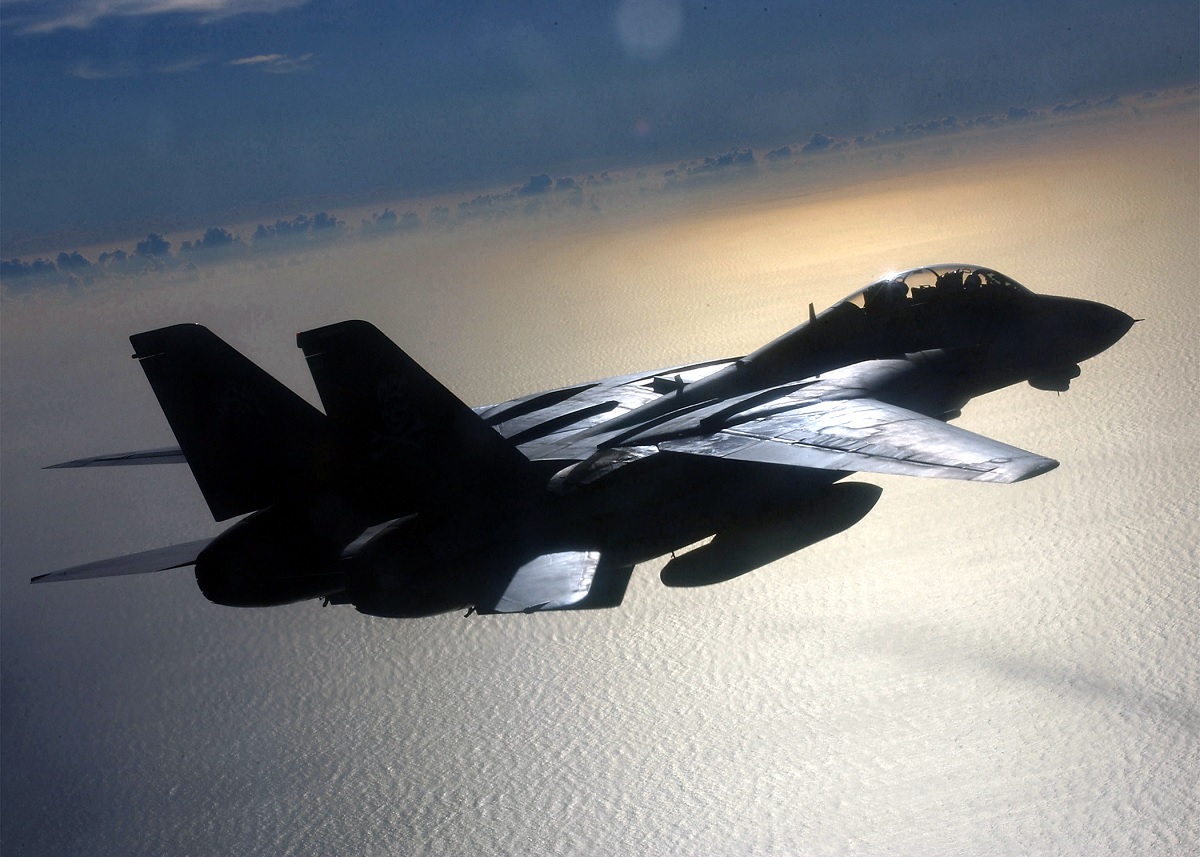
“The alert bell rang, and I took off accompanied by Lt. Ruggero Rospo from Sigonella. The GCI [ground controlled interception] vectored us towards a target classified as unknown. While approaching, we activated our radars and attempted several sweeps, but our screens went ‘white’ almost instantly—due to heavy electronic countermeasures [ECM] deployed by what turned out to be US fighters. We saw them for the first time from a range of about 20 miles. There was a long trail of navigation lights—which turned out to be several KC-135s. Before long, we found ourselves underway in the middle of a huge airborne armada, with unknown aircraft all around us. I informed our GCI and decided to leave the area. The few other Starfighters scrambled with similar orders to inspect were aggressively approached by F-14s of the US Navy that asked them to move away—immediately.”
The AMI commanders promptly passed news of the massive USAF formation up the chain of command, and the report ultimately reached Craxi. He immediately telephoned Malta’s prime minister to warn him about the US “bomber formation approaching” the island. About 30 minutes before the American aircraft reached their targets in Libya, the Maltese government relayed the warning to Tripoli, reporting a formation of USAF aircraft over the central Mediterranean. As a result, Muammar Gaddafi and his family were hurriedly evacuated from their residence inside the Bab al-Aziziya complex just minutes before the bombing began.
Libyan Air Wars Part 3: 1986-1989 is published by Helion & Company Limited and is available to order here.
Photo by U.S. Air Force, US Navy, and Mike Freer via Wikipedia


