

The fly-by-wire systems currently used in space shuttles and in modern military and civilian aircraft were inspired by the F-8 DFBW system
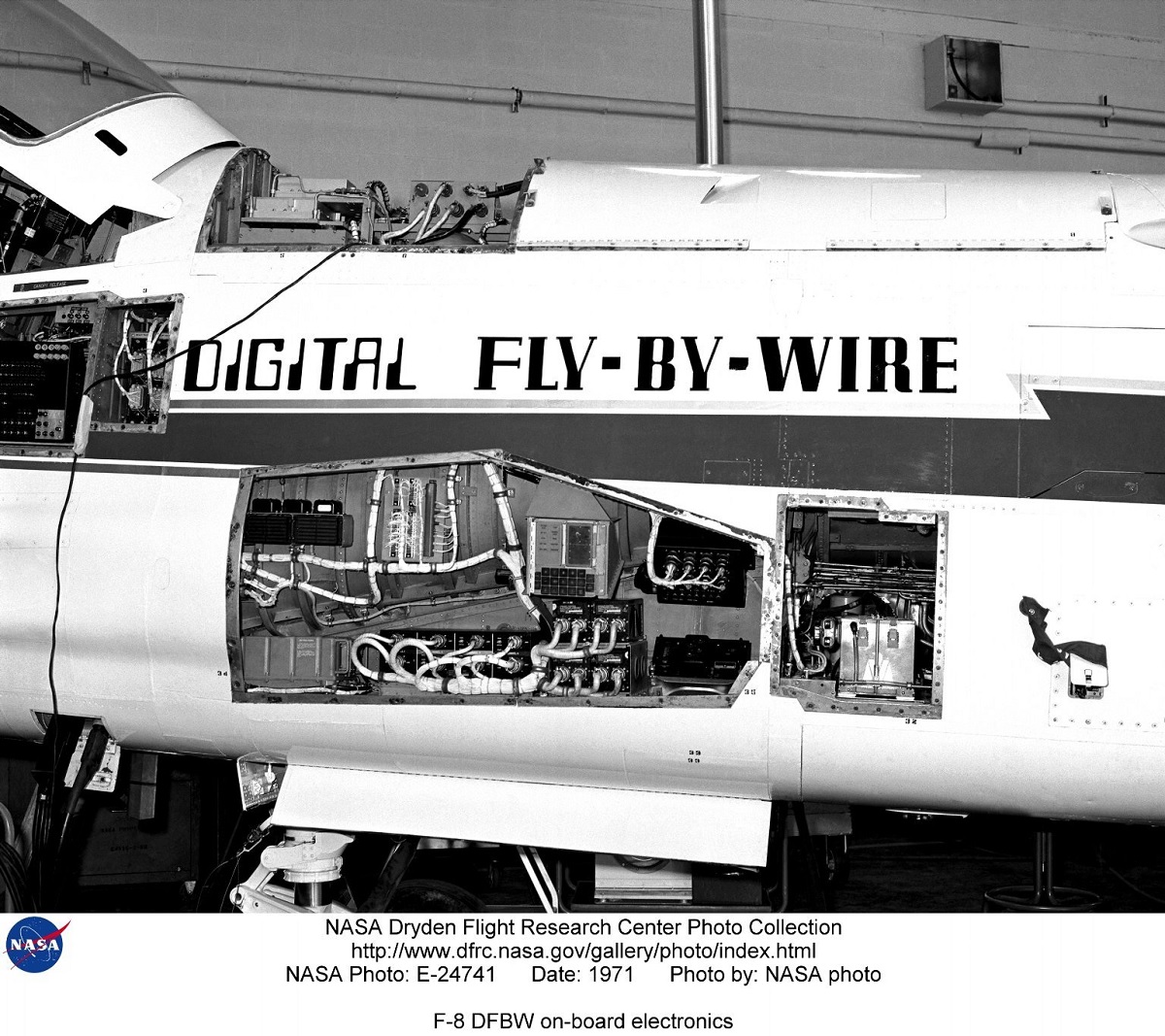
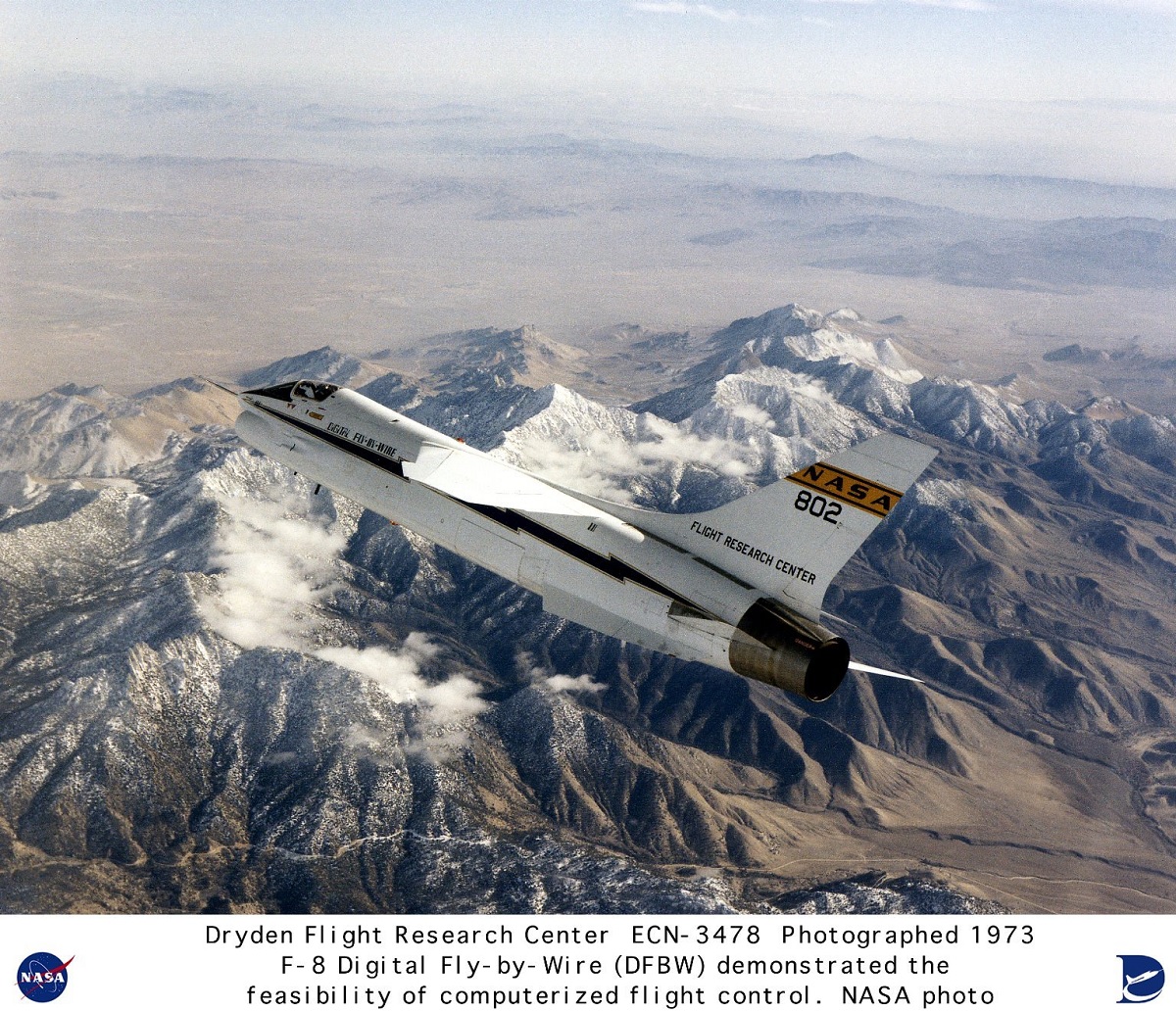
The F-8 Digital Fly-By-Wire (DFBW) aircraft’s control system was initially replaced by a primary system employing an Apollo digital computer, despite its exterior being identical to a regular U.S. Navy F-8C Crusader. Three analog computers were employed in the backup system.
Electronic signals from the stick and rudder movements of the aircraft were sent to the computer, which then produced signals to change the control surfaces. The digital fly-by-wire aircraft was intended to handle very identically to a regular F-8C thanks to the system’s design.
The F-8 DFBW team dismantled the aircraft’s guns and ammunition boxes in order to carry the computers and other equipment. Later, in Phase 2, the aircraft’s flight control system was controlled by three IBM AP-101 computers.
The F-8 DFBW flight research project validated the fundamental ideas behind the all-electric flight control systems that are now standard equipment on both military and commercial transports as well as practically all modern high-performance aircraft.
On May 25, 1972, research pilot Gary E. Krier took the controls of the modified F-8C Crusader that served as the testbed for the fly-by-wire technology for the first time in the 13-year project’s history. The NASA Flight Research Center in California (now known as Dryden Flight Research Center) and Langley Research Center collaborated on the project. There were 211 flights in all.
On December 16, 1985, Ed Schneider, a Dryden research pilot, made the aircraft’s final flight. The F-8 DFBW system was a precursor to modern fly-by-wire systems, which are used to make military and commercial aircraft safer, more maneuverable, and more effective. Older hydraulic control systems were replaced with electronic fly-by-wire systems, allowing designers to create aircraft with less in-flight stability.
Fly-by-wire systems’ redundancies make them safer. Because computers can order more frequent corrections than a human pilot can, they are more nimble. In the case of airplanes, automated control guarantees a smoother ride than a human pilot can. Because it is lighter and takes up less space than the hydraulic systems it replaced, digital fly-by-wire is more effective. By doing this, the airplane can carry more people or pounds of cargo while using less fuel to travel.
Currently, digital fly-by-wire is employed in a wide range of aircraft, including the Boeing 777 and F/A-18 fighters. The DFBW research initiative is regarded as one of the most important and fruitful NASA aeronautical initiatives since the organization’s founding.
Source: NASA; Photo by NASA

