

From combat missions to orbit: the AH-1 Cobra’s legacy in the U.S. Marine Corps
The AH-1W Super Cobra served as the U.S. Marine Corps’ primary attack helicopter for more than three decades, leaving behind a legacy that spanned multiple wars, continents, and careers — including at least one that reached outer space.
Retirement of the last 3rd MAW Super Cobra
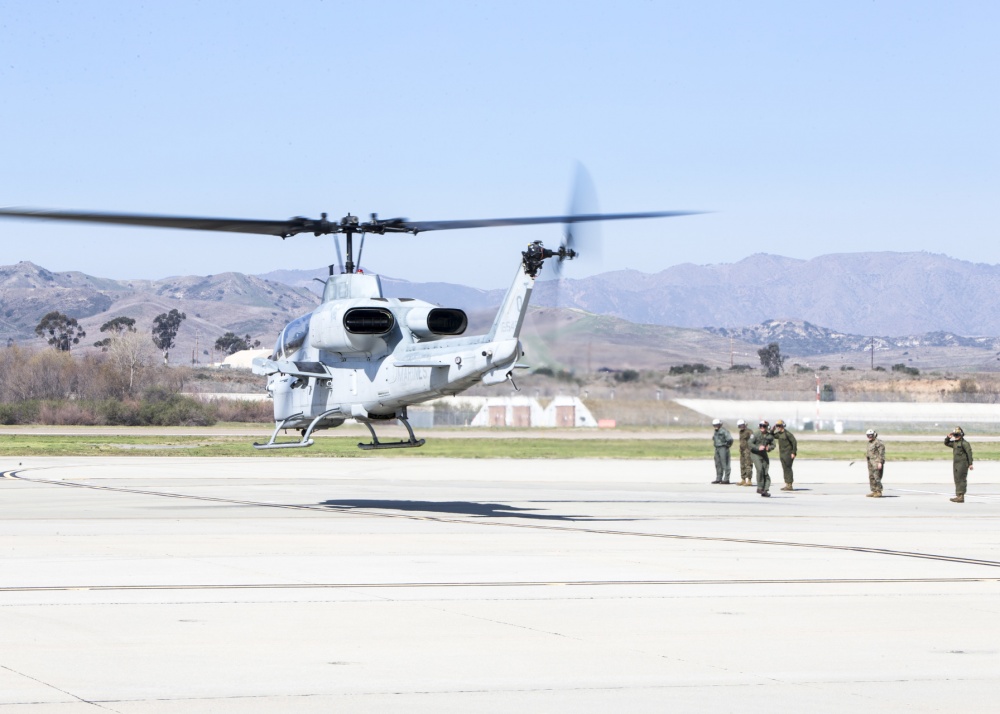
On Feb. 6, 2017, the 3rd Marine Aircraft Wing (MAW) retired its last AH-1W, with Capt. John T. Fischer and Capt. Daniel J. Houser — both with Marine Light Attack Helicopter Training Squadron (HMLAT-303), Marine Aircraft Group (MAG) 39 — flying the aircraft to Davis-Monthan Air Force Base for storage.
Since its activation on April 30, 1982, HMLAT-303 had trained Cobra and Huey pilots for the Marine Corps and Navy through an extensive syllabus covering familiarization, navigation, ordnance, terrain, formation, instrument, and night vision goggle flight. Though HMLAT-303 itself didn’t deploy, the AH-1W had a long operational record with other HMLA squadrons in Desert Storm, Iraqi Freedom, and Enduring Freedom.
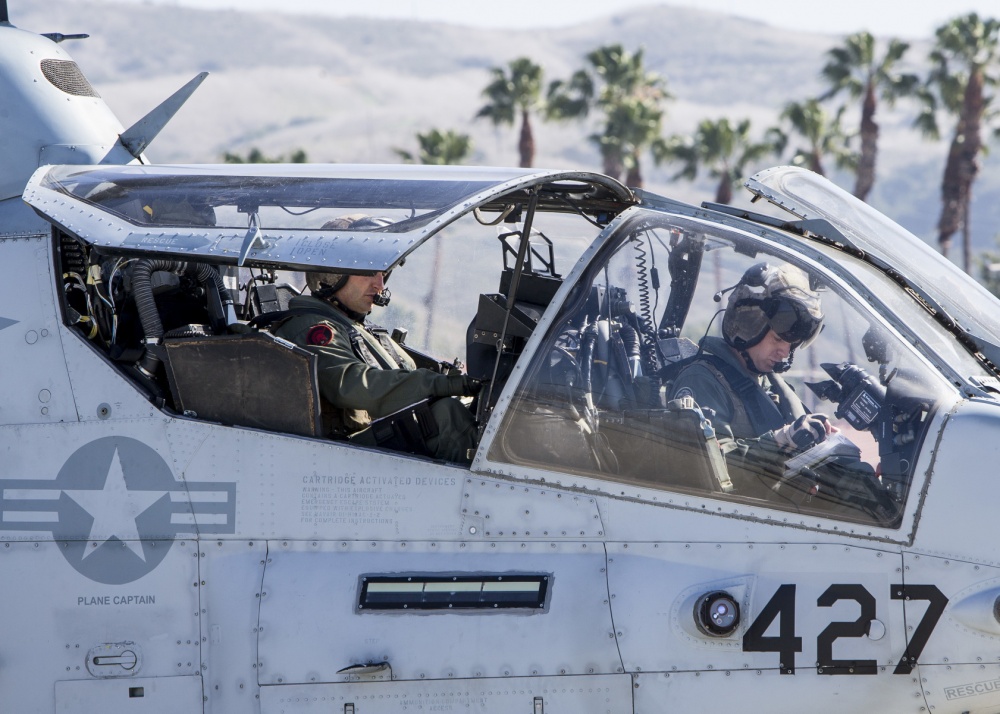
“The majority of the Cobra instructor cadre at HMLAT-303 grew up with the AH-1W at their first squadron and deployed with it,” said Capt. J. J. Pierce, HMLAT-303 adjutant and transitioned AH-1Z “Viper” pilot. “It’s been special flying the legacy AH-1Ws, and they definitely played a huge part in the Marine air-ground task force.”
Enter the AH-1Z Viper
The Super Cobra’s retirement made way for the AH-1Z Viper, a substantially more capable platform. According to Capt. Fischer, a Weapons and Tactics Instructor with HMLAT-303, the AH-1Z’s improved engines and four-bladed rotor system deliver significantly higher gross weight capacity, translating to a larger ordnance payload. Where the AH-1W had four external wing stations, the AH-1Z has six: the outermost two (stations 1 and 6) can carry AIM-9 infrared-guided air-to-air missiles for self-defense, while stations 2 through 5 can each be configured with 19 × 2.75″ unguided rockets, 4 × AGM-114 Hellfire missiles, 7 × 2.75″ APKWS guided rockets, a single AIM-9, or a 77-gallon auxiliary fuel tank.
The AH-1Z also features a digital glass cockpit, approximately 30 minutes more endurance on station, and around 84 percent component commonality with the UH-1Y Huey, simplifying maintenance. “It’s faster, carries more ordnance, and makes maintenance processes more efficient,” Pierce noted.
Surplus AH-1Ws offered for foreign sale
As the replacement program progressed — with the last AH-1W expected to leave service by 2020 — the U.S. government moved to sell surplus Super Cobras through Foreign Military Sales (FMS) or Direct Commercial Sale (DCS). The H-1 Light Attack Helicopter Program Office (PMA-276) held an industry briefing in January 2018, offering international buyers an upgraded version with a glass cockpit.
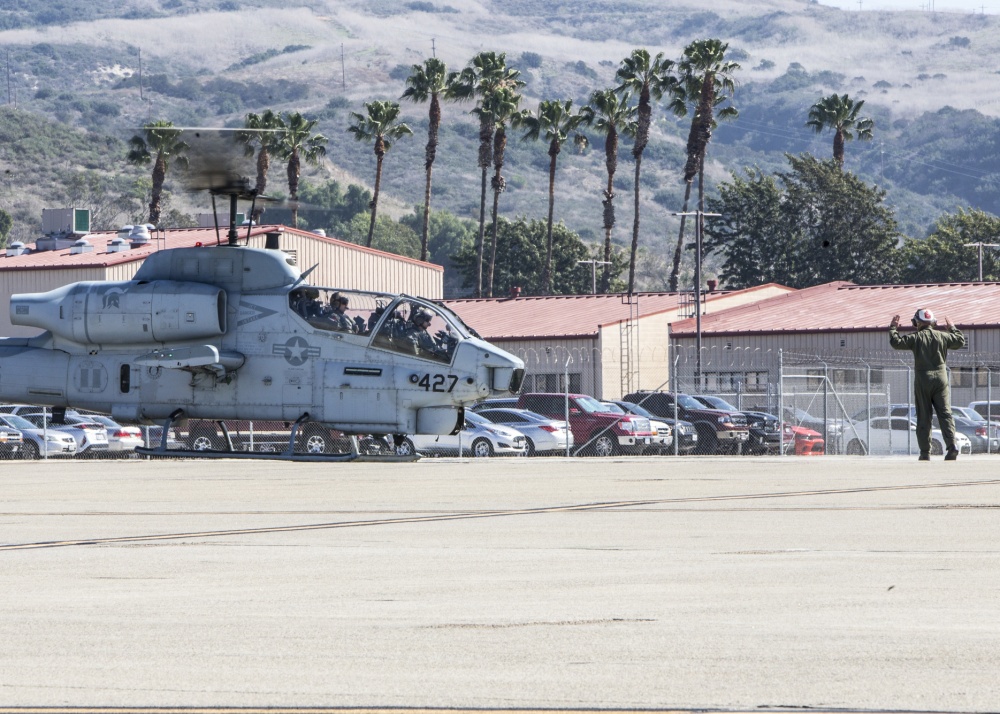
The AH-1W, powered by twin General Electric T700-GE-401 engines, had a top speed of 147 knots, a range of 256 nautical miles, and a service ceiling of 18,700 ft. Its armament included a nose-mounted 20mm Gatling gun with 750 rounds, plus provisions for 70mm and 127mm rockets, TOW and Hellfire air-to-surface missiles, Sidewinder air-to-air missiles, and Sidearm anti-radiation missiles. Countries already operating the type — including Bahrain, Japan, Jordan, Pakistan, South Korea, Taiwan, and Turkey — were seen as potential buyers, as were new customers seeking a dedicated rotary-attack capability.
A pilot’s farewell — and a launch toward space
Among those who said goodbye to the Cobra was Maj. Jasmin Moghbeli, selected for NASA’s Astronaut Candidate Class of 2017. On Jul. 7, 2017, she flew her last Cobra sortie at Marine Corps Air Station Yuma, Ariz., closing a chapter that had included over 500 missions — 150 of them combat sorties — and more than 1,200 flight hours in the aircraft.
Moghbeli had originally joined the Marine Corps hoping to fly jets, believing fixed-wing experience would better position her for a NASA career. That changed the moment she saw a Cobra fly overhead. “I want that one,” she said instinctively. She went on to serve three deployments to Afghanistan with the 31st Marine Expeditionary Unit and later tested the Cobra’s operational capabilities with Marine Test and Evaluation Squadron 1 at Yuma.
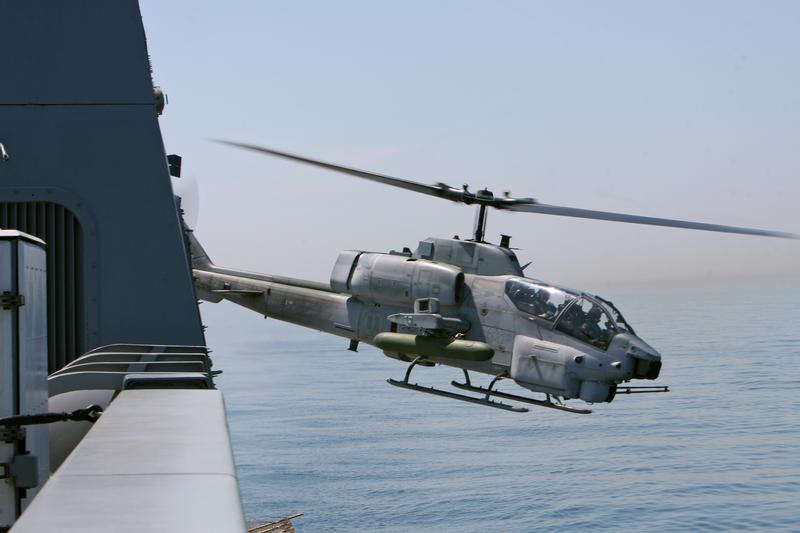
“My favorite thing about flying the Cobra,” she explained, “is being able to support the Marines on the ground. We’re not too high, we’re not too low; we have great situational awareness with a birds-eye view where we can see exactly what’s going on and pass it on to the guys on the ground.”
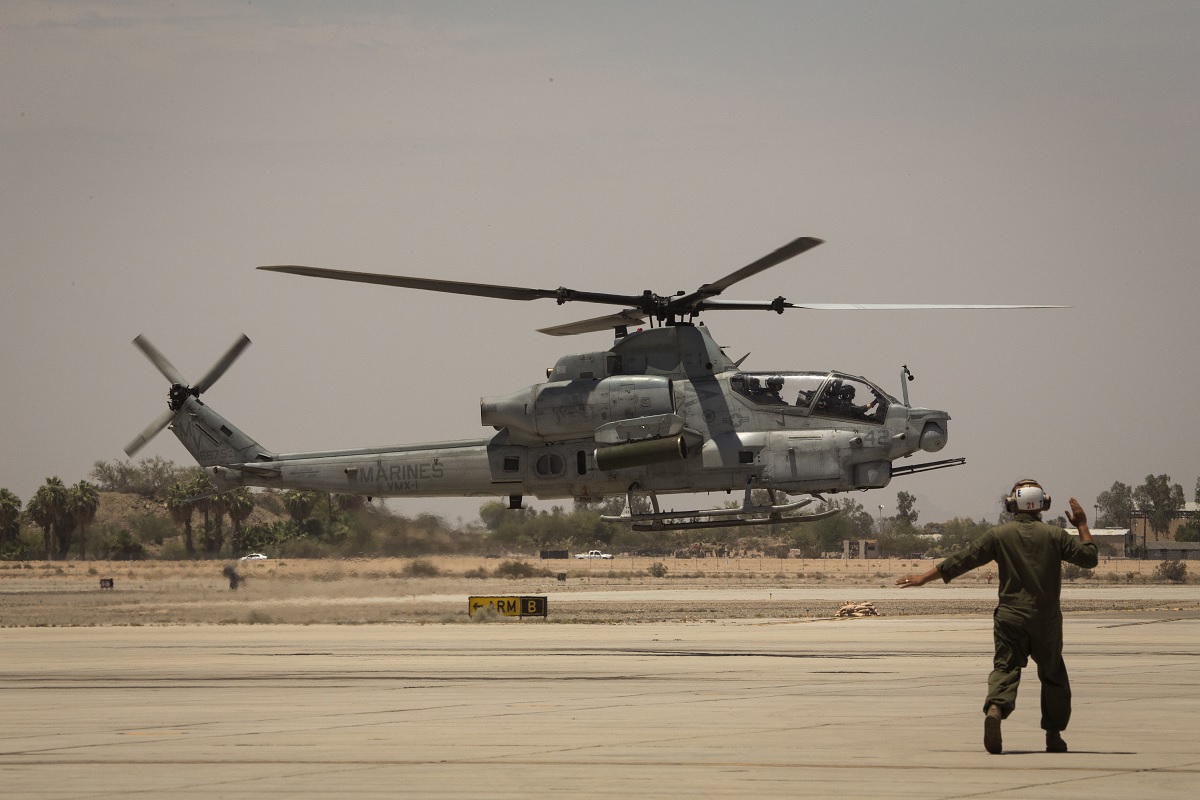
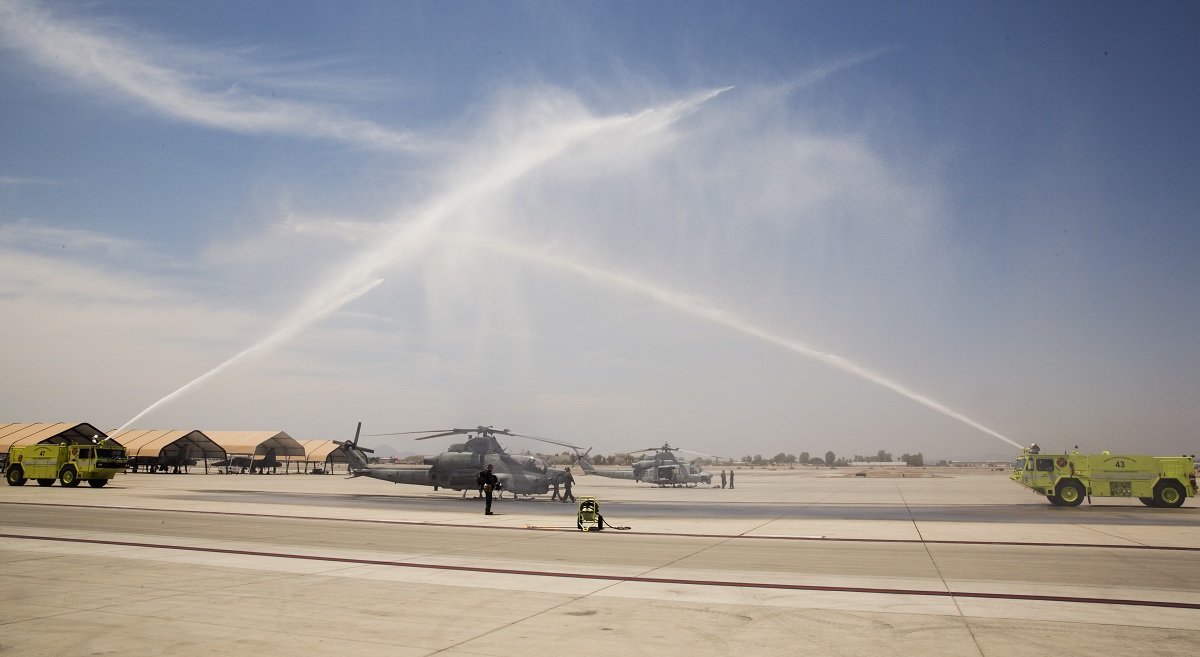
Her final flight was, in her own words, “a little bittersweet.” She was scheduled to report to Johnson Space Center in Houston to begin two years of astronaut training — trading rotor blades for rocket fuel, but carrying the Cobra’s spirit with her.
Photos by Pfc. Juan Anaya Jr. / U.S. Marine Corps / NAVAIR / Lance Cpl. Christian Cachola / U.S. Marine Corps

